
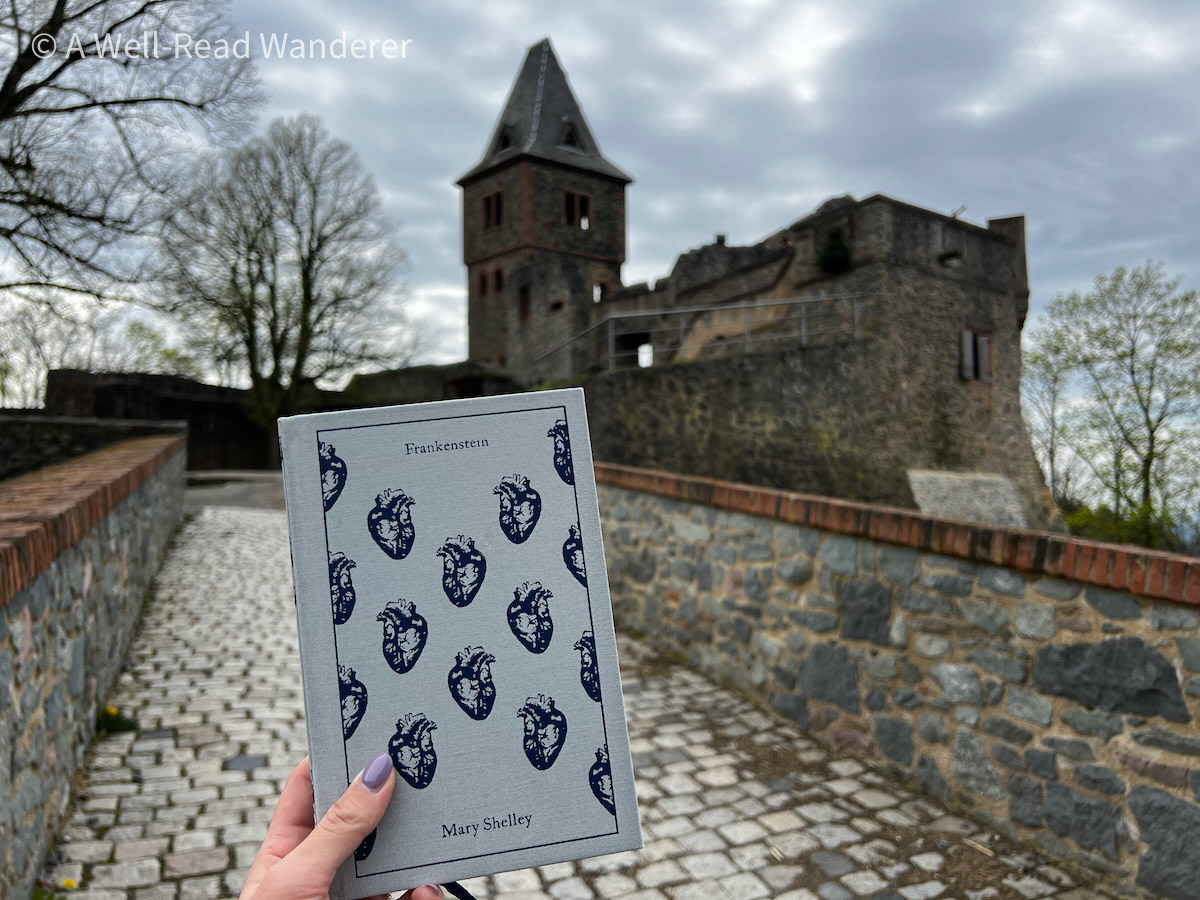
Visit the Real Frankenstein Castle and Unravel its Mysteries
Did you know that you can visit the real Frankenstein castle in Germany?
If you’ve been around my blog or social media, it’s no secret that I love Frankenstein by Mary Shelley. It’s an incredibly deep, philosophical novel with so much more to it than you’d ever imagine if you’re only familiar with the Hollywood version of the tale.
So of course, being a literary travel writer, I had to visit the real Frankenstein castle in Germany and tell you all about it. If you’re a fan of the novel or literary history more generally, this makes a fun and easy half-day trip from Frankfurt, Germany.
In this post, I’ll tell you about the castle’s history and its ties with a famous alchemist as well as its possible connections to Mary Shelley and her famous novel. I’ll also let you know what to expect for your visit and special events that happen there each year.
Don’t forget to pin this post for later reference, and share it with your bookish, traveling friends.

As always, this post may contain affiliate links, which means at no additional cost to you, shopping from them may generate small commissions to support the operations of this blog.
Whenever possible, I recommend buying books at local bookshops or through Bookshop.org, because shopping there puts the profits right into the hands of indie bookstores all over the country.
Burg Frankenstein: From Medieval Fortress to Modern-Day Attraction
The real Frankenstein castle, or Burg Frankenstein, as it’s known in Germany, is situated at 1,210 feet in the Odenwald mountains overlooking the town of Darmstadt, about 45 km from Frankfurt.
The castle is first mentioned in historical records in 1252. It was built by Lord Conrad II Reiz von Breuberg and served as the ancestral home of the Lords of Frankenstein for 400 years, each of whom expanded the castle in their own way.
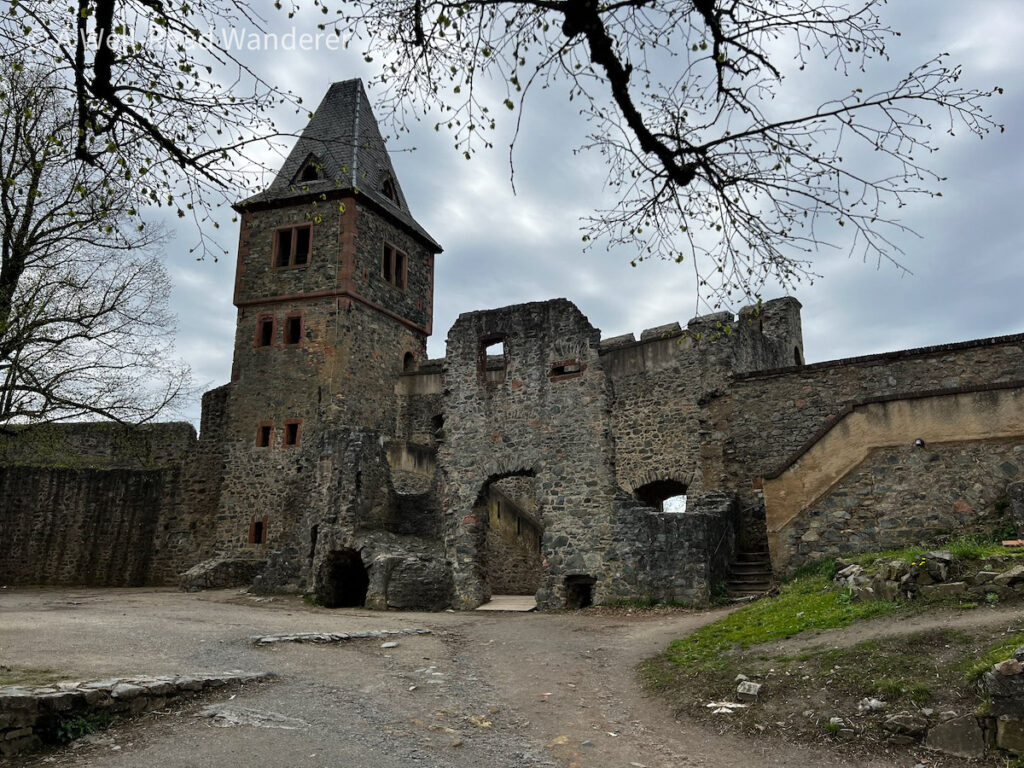
In the 1700s, Burg Frankenstein was actually used as a hospice home for disabled soldiers and the elderly. Over time, the castle fell into disrepair until it was renovated during the 19th century, when there was a renewed interest in medieval castles in the region. At this point, it was renovated to become a tourist destination.
In the 1980s, several of the historic buildings on site were demolished to build a castle restaurant. Today, the castle is owned by the State of Hesse and is undergoing an extensive renovation to bring back some of its splendor.
Tip: There are actually two Frankenstein Castles in Germany! This is Burg Frankenstein in Hessen, not to be confused with the Burgruine in the town of Frankenstein. That castle ruin has no ties to the story.
Related: If you’re a Mary Shelley fan, you’ll want to add the House of Frankenstein museum in Bath, England to your literary bucket list.
Mary Shelley & the “Real” Frankenstein Castle
Mary Shelley is credited as the inventor of the science fiction genre, one of the many interesting facts about the writer. It was the summer of 1916. Mary Shelley was 19 years old and traveling in Europe with her husband Percy Bysse Shelley and their friend, Lord Byron, when she first got the idea for Frankenstein. One evening, Lord Byron challenged their group of friends to compete against each other with their very best ghost stories.
Mary Shelley took several days, agonizing over her story, before she came up with the foundation of the story of Victor Frankenstein and his monster. After this event, Shelley returned to Bath, England, where over the next year and a half, she expanded the initial story into the novel Frankenstein, which was published on New Year’s Day in 1818.
Tip: You can now visit Mary Shelley’s House of Frankenstein museum where she lived in Bath.

But what does that have to do with the medieval Burg Frankenstein? Well, a popular story is that Shelley was inspired by the Frankenstein castle ruins and their ties with an infamous alchemist who conducted anatomical experiments there.
It was Radu Florescu’s 1975 book, In Search of Frankenstein, that first popularized this connection between the novelist and the castle. In his book, Florescu proposes that Shelley may have encountered stories about Dippel during her travels in Germany, potentially drawing inspiration from his life and work for her novel.
While Shelley did travel along the Rhine River in 1814 and thus may have seen the castle, there’s not actually any definitive proof she ever visited, or ever heard the stories about Dippel’s experiments.

Still, the idea took hold, and the Burg Frankenstein itself has become part of the legend of Frankenstein and its origins.
Related: Did you know that you can see Lord Byron’s graffiti at an iconic Greek temple ruin, the Temple of Poseidon?
Johann Conrad Dippel: The Alchemist of Frankenstein Castle
So who was this infamous alchemist, Johann Conrad Dippel? Dippel was born at Burg Frankenstein in 1673 and became one of the most controversial and scandalous figures in the region. He was a man who wanted to push the boundaries of knowledge, as an alchemist, theologian, and physician.
Like Victor Frankenstein, Dippel was deeply interested in the secrets of life and death. His fascination with human anatomy and the source of life led him to develop “Dippel’s Oil,” made from distilled bones, which he claimed had strong medicinal properties.

Rumors of his anatomical experiments ran rampant during his lifetime. Though he likely conducted simple dissections, the tales spread that he was involved in grave robbing and macabre experiments on human corpses. The tales were greatly exaggerated, as there’s never been any evidence of grave robbing or grotesque experiments, but the stories gave him and the castle where he lived an eerie mystique.
This seems a strong coincidence indeed that a castle bearing the name of Frankenstein was home to a man of such a reputation, and so many believe it possible or even likely that Shelley may have heard and been inspired by the stories in writing her own. However, we’ll likely never know.
Planning Your Visit to Burg Frankenstein
A visit to Burg Frankenstein is like a journey through time, a chance to connect with the literary history and legends that have shaped it. Whether you’re a history buff, a literature enthusiast, or simply seeking a unique travel experience, Burg Frankenstein will leave a lasting impression.
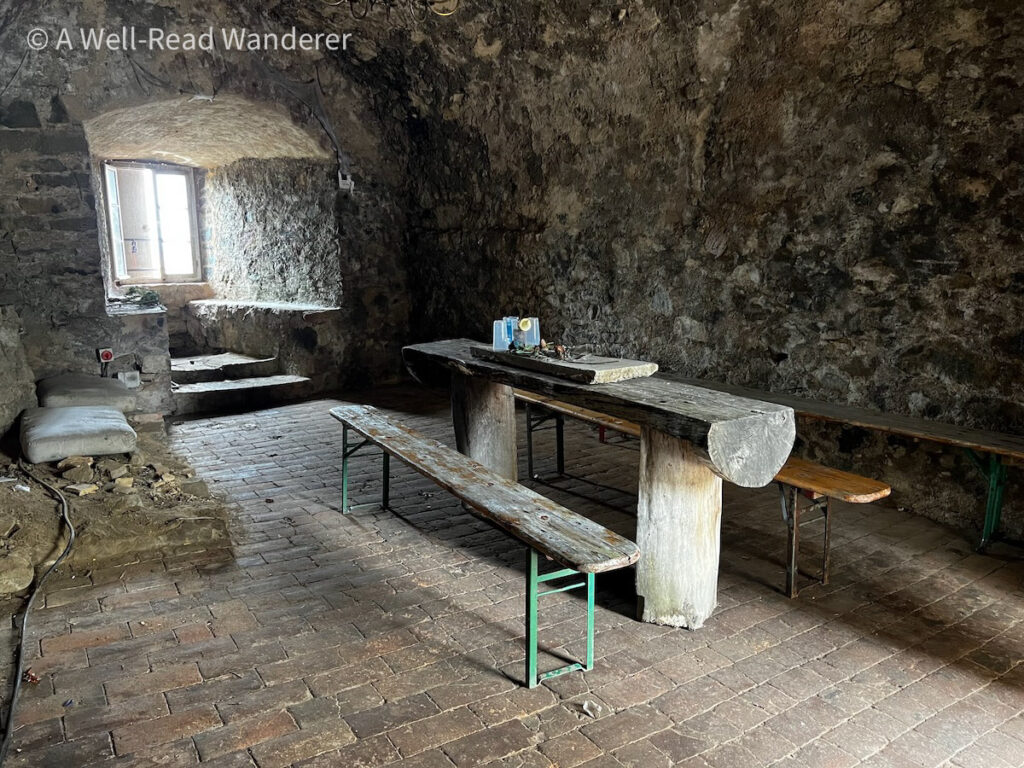
Today, the Burg Frankenstein is owned by the State of Hesse and is undergoing an extensive renovation. Parts of the castle remain open to the public, while others will be closed for construction.
The State of Hesse is not necessarily posting updates of what will be closed or open at any particular time, so if you want to visit the real Frankenstein Castle, you have to be prepared to be flexible and go with the flow, happy to see what you can and okay with not seeing some parts of the castle.
Your visit will be an unstructured wander through and around the castle ruins. A little bit of flexibility and a sense of adventure will go a long way in ensuring a rewarding visit. Some informational plaques remain, though information is given in Germany, so you should have your Google Translate ready.
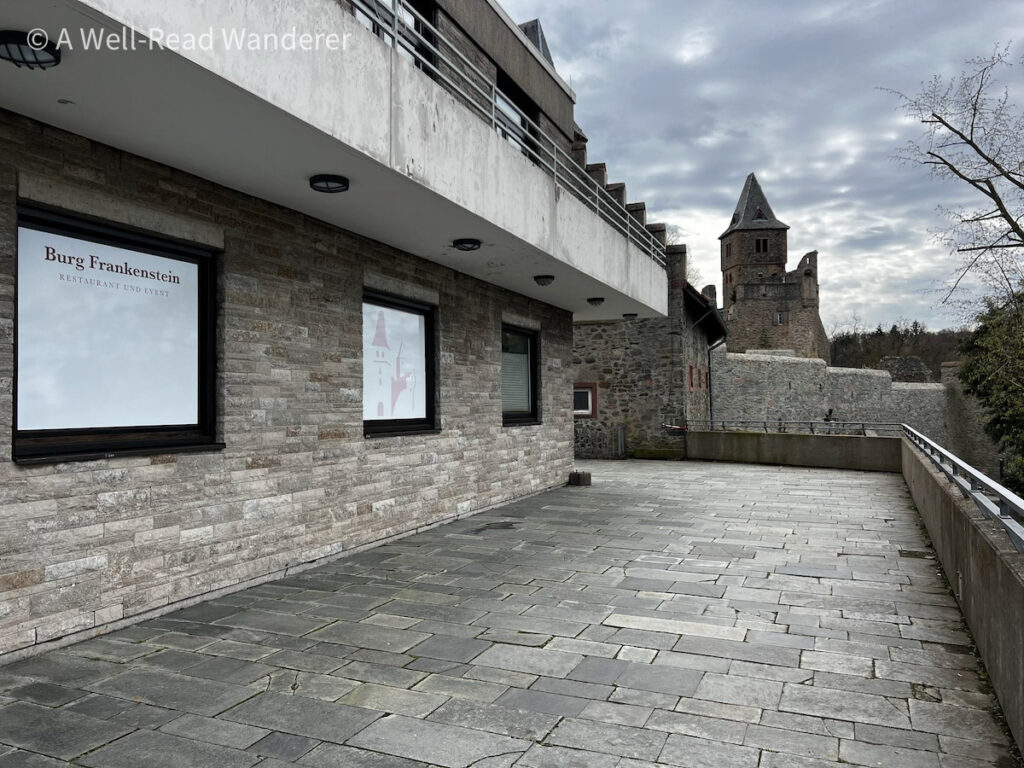
The on-site restaurant is closed indefinitely, but it would be a lovely spot to bring a picnic. There are bathroom facilities, though it’s safest to be prepared for their closure at any point during construction.
Tip: There are several hiking trails in the region that can be combined with a visit to the castle to make this a memorable half-day experience. Check it out on Komoot to find a trail whose duration best suits your interests and abilities.
Getting to Burg Frankenstein
Burg Frankenstein is located approximately 40 km south of Frankfurt, making it an easy day trip from the city. By car, the journey takes around 30-40 minutes. You can park right at the castle, unless they close off the parking area at points for construction.
Alternatively, you can take the S-bahn train from Frankfurt to Darmstadt and then a taxi to the castle, which should take about 1.5 hours in total.
Halloween at Frankenstein’s Castle
Frankenstein’s castle is one of the best Halloween travel destinations in the world. For 43 years, they hosted an all-out haunted house experience inspired by its ties to Frankenstein.
The haunted house at Frankenstein Castle became iconic for its extreme, terror-inducing experience, including full contact between “scarers” and visitors (this is definitely not my cup of tea, but I have heard from others that they were even picked up and thrown off a ledge — onto a landing mat that they couldn’t see ahead of time).
Sadly, with current renovations happening in the castle, the annual event has been moved to another nearby castle ruins — Königstein Castle. Perhaps once the renovations are completed, the Burg Frankenstein will once again host people who want to pay money to shit their own pants.

Other literary sights nearby
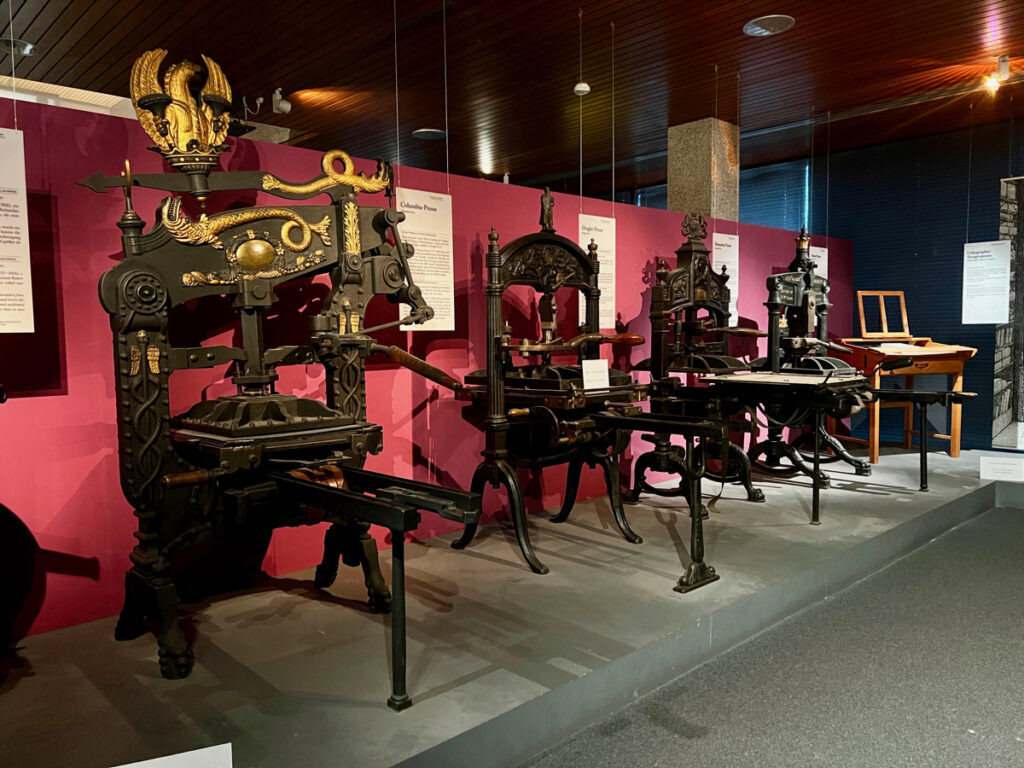
If you’re staying in the Frankfurt area of Germany for a little while, you can also visit the hometown of Johannes Gutenberg, inventor of the movable type printing press. Mainz, Germany, can be combined with Frankenstein Castle in one literary day trip.
In Mainz, you can visit the Gutenberg Museum, and if you plan ahead, you can even do a printing workshop and get your hands dirty in the printing business. If you’re going during Christmas season, they do have a very charming Christmas market as well.
In Frankfurt proper, you can also visit Goethehaus, the museum dedicated to Germany’s beloved writer Johann Wolfgang von Goethe.
Travel Resources At-A-Glance
All of the following are links to sites and services I actually use to book and plan my travel or to purchase books or travel gear.
For flights: Skyscanner is my number one go-to resource for booking flights. I love using the “explore” function to find the cheapest places I can fly during a given time or using the fare calendar to identify the cheapest days to fly.
For hotels and lodgings: For hotels, hotels.com, and for vacation rentals, VRBO.com. I’ve had much better experiences with private rentals through this website than through other popular private vacation rental websites.
For car rentals: Kayak allows comparisons across a wide range of booking agencies and lists reviews of companies as well. I’ve found this to be the most user-friendly and efficient way to compare car rental prices.
For tours & excursions: Viator and Get Your Guide are my top choices for booking excursions and tour experiences in a new destination.
For travel gear: Amazon.com and REI for more outdoorsy items. Check out my travel gear recs here.
For booking trains & buses: I find the Omio app and website to be the most easily navigable for comparing options for public transportation, especially in Europe,
Best travel credit card: My favorite travel rewards credit card for European travel has been the Chase Sapphire Rewards card. Visa is accepted just about everywhere in Europe, and there are no foreign transaction fees on the card. Some of the travel benefits I love on the Chase Sapphire include free TSA pre-check or Global Entry (worth it every time), an annual $200 travel credit, an annual $200 hotel benefit, built-in rental car, and trip insurance, and points are worth 50% more when used to book travel. I travel around Europe a LOT, and I end up with many free flights and hotel stays from using my points on my Chase Sapphire.
For books: Bookshop.org often has prices as good as Amazon or sometimes better, but profits go to indie bookstores all over the country. Whenever possible, consider buying your books from this online indie bookshop resource.
What do you think, is visiting the real Frankenstein Castle on your literary travel bucket list? Would you go for the terrifying fright fest?
Don’t forget to pin this post for later, and subscribe to my newsletter so you don’t miss out on any literary travel tips or reading recommendations.