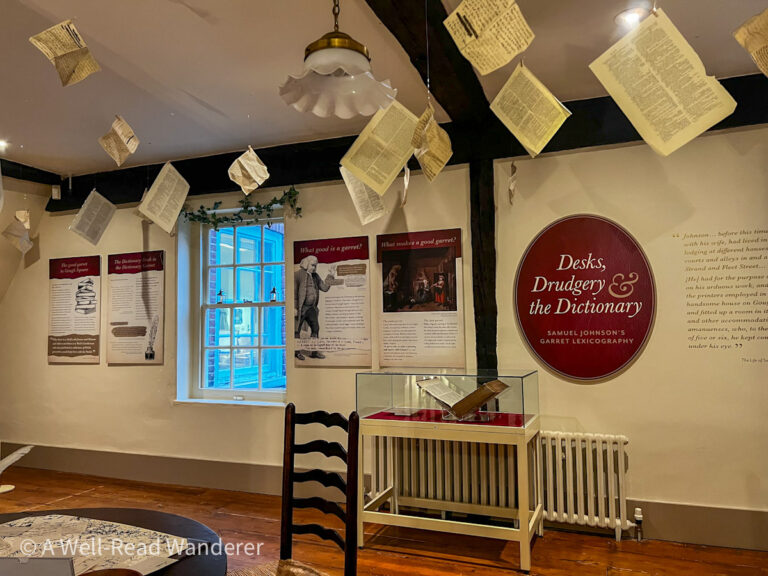


Is the Jane Austen Centre in Bath Worth Visiting? An In-Depth Guide
Are you a Jane Austen fan wondering if it’s worth your time to visit the Jane Austen Centre in Bath, England?
With popular writers like Jane Austen, who is beloved in her home country, there are so many tourist destinations that a fan could visit. As a dedicated literary travel writer myself, I’m here to check out all those destinations and tell you in detail what you can expect from each, to help make your life and decisions easier.
The Jane Austen Centre in Bath is a popular museum dedicated to the writer and focuses on her time in Bath. I’ve toured the entire thing, and I’m here to let you know my honest thoughts and tips to make the most of your visit.
In this post, I’ll go into detail and let you know exactly what to expect from a visit to this writer’s museum. Plus, I’ll help you break it down whether or not it’s worth a visit depending on your personality, interests, budget, and time constraints.
Don’t forget to pin this post for later, and sign up for my newsletter to get exclusive book recommendations and find out about upcoming events for book lovers.

Disclaimer: I received free admission to this museum with a press pass complimentary of Visit Bath. All opinions are my own, and as always, I’ll keep it 100% honest.
As always, this post may contain affiliate links, which means at no additional cost to you, shopping from them may generate small commissions to support the operations of this blog.
Whenever possible, I recommend buying books at local bookshops or through Bookshop.org, because shopping there puts the profits right into the hands of indie bookstores all over the country.
No time to read right now? Check out my YouTube video about the Jane Austen Centre:
Jane Austen in Bath
Bath has been a popular wellness destination for centuries, dating back to the times of the Druids and then to the Romans. But why Bath? The natural hot springs, of course, believed to have healing properties.
When Austen lived and wrote, Bath was still a popular spa town and saw a huge boost in visitors and development. People flocked to Bath to “take the waters” to improve their health and to participate in one of the most important social scenes outside of London.

Austen herself lived here periodically between 1801-1806, though her letters indicate she wasn’t necessarily the biggest fan of Bath. Still, she gained very valuable experiences and insight into Bath society that inspired more than one of her novels. Two of Austen’s novels prominently feature Bath as a setting: Persuasion and Northanger Abbey, two of my personal Austen favorites (and Northanger Abbey is one of my favorite cozy reads).
It was Austen’s own experiences participating in popular society activities that gave her the knowledge and insight evident in those novels. Like her characters, Jane engaged in activities such as walking the Pump rooms, having afternoon tea, promenading in the various green spaces, and dancing the night away at the Assembly Room balls.
Note: Austen’s heroine of Northanger Abbey, Catherine Morland, has a more favorable attitude toward Bath than her creator:
“They arrived in Bath. Catherine was all eager delight; her eyes were here, there, everywhere, as they approached its fine and striking environs, and afterwards drove through those streets which conducted them to the hotel. She was come to be happy, and she felt happy already.”
Related: You can find lots of Austen novels and merchandise at the many incredibly Bath bookshops. This town has some of the best bookstores in the world, if you ask me.
What is the Jane Austen Centre in Bath?
First off, let’s clarify what the Jane Austen Centre is not – it is not one of Austen’s actual residences while living in Bath, nor is it a recreation of one. If you want to see inside where Jane actually lived, you’ll need to make a trip out to Chawton to visit her home there (or look for times when they offer a virtual museum tour).

Austen actually lived in multiple accommodations in Bath, none of which has been preserved since her time there. So, the Jane Austen Centre is not one of Austen’s homes, but more of a museum dedicated to celebrating the author and her time in the gorgeous spa town.
The centre first opened in 1999, with a stated mission “to inform, entertain, and make every visitor happy.”
According to their official website, the Jane Austen Centre in Bath now attracts more than 150,000 visitors each year, with up to 1,000 visitors a day during the summer months. When COVID lockdowns forced its closure, the Centre nearly closed down for good due to lack of funds, but crowd funding allowed it to weather the storm and reopen as lockdowns ended.
In addition to running the popular museum on Gay Street in Bath, the Jane Austen Centre also hosts an annual, 10-day long Jane Austen Festival each September, which takes over the city and brings the Regency period fully to life.
Related: You can scope out places where Jane Austen actually did say as well as important locations of scenes from her novels and more on a Jane Austen tour of Bath
What to Expect from your Visit
So, what is it like to visit the Jane Austen Centre? You’ll walk up to the entrance of a beautifully preserved Georgian row home, where you’ll be greeted by a costumed character (perhaps even Mr. Bennett himself, who’s often stationed there). Take your photo with the statue of Jane outside and head inside to show or purchase your ticket (pre-booking HIGHLY encouraged).
Have a look around the well-stocked gift shop and head to the waiting room to begin your timed tour.
Costumed Introduction
Your entrance to the Jane Austen Centre is on a timed admission basis. So at the appropriate time, you and the others on your tour will be ushered into a waiting room. There is some seating, but not enough for all. While here, you can look at some of the displays around the room.

At the appointed hour, a costumed guide will usher you into another room, where all will be invited to sit and listen to a 15-minute presentation on Jane Austen and her connection to Bath. All of the employees at the Jane Austen Centre take on the role of a different Jane Austen character, so you never know who you’ll get. For me, it was the infamous Wickham from Pride and Prejudice.
Your character guide will show you an Austen family tree, a map of locations important in Austen’s life, and tell you all about her family and her life, with a special emphasis on her time in Bath.
Self-Guided Museum
After your 15-minute introduction has concluded, you’ll be ushered into the self-guided portion of the Jane Austen museum. From here on out, while there are costumed workers available to answer questions, you’re on your own to explore the rest of the museum.

In the self-guided portion of the museum, the Centre aims to bring Regency England to life. You’ll get to peer into the windows of a habberdashery, try a Bath biscuit, and see what clothes would’ve been worn during Jane’s time.
You’ll also be able to read about the life of Jane Austen, Bath during the Regency period, and more on informative wall displays.
You’ll also have the opportunity to stop and watch a 13-minute video filmed and produced by the Jane Austen Centre. It’s a corny but loving depiction of Austen while she lived in Bath. Interestingly, it was produced by Adrian Lukis, who played Mr. Wickham in the BBC Pride and Prejudice. The Jane Austen Centre in Bath is the only place where you are able to view this short biographic film.

You’ll also get to see displays on some of the most popular Jane Austen film adaptations. In one room, you can see a number of photographs, a letter from Emma Thompson who donated them, as well as a signed copy of her script (if you didn’t know, Emma Thompson won an Oscar for her screenplay adaptation of Sense & Sensibility).
Tip: Before visiting Bath, I recommend not only reading these novels but also watching the following film adaptations of Persuasion and Northanger Abbey. You’ll recognize a lot of filming locations during your time in Bath.
Interactive Elements
The self-guided portion of the Bath Jane Austen Center is not just about reading. They do a great job of incorporating interactive elements into this part of your visit. For example, you’ll have the opportunity to try Bath biscuits, guess the functions of various Regency era tools, and play popular Regency era games.
In the most popular element, you’ll be able to dress up in regency attire and take a photo in front of Pemberley Estate next to Mr. Darcy, who’s just emerged from the lake. Costumed characters are on hand to help you into and out of your costumes and take your photo if needed. The dresses are designed to fit most sizes.

Realistic Jane Austen Depictions
As you tour the museum, make sure to keep an eye out for a couple of features unique to the Jane Austen Centre that you won’t see at any other Austen sights. Specifically, the Bath Jane Austen Centre has taken pains in the last few decades to show visitors what Jane might have actually looked like.
Forensic portrait of Jane Austen
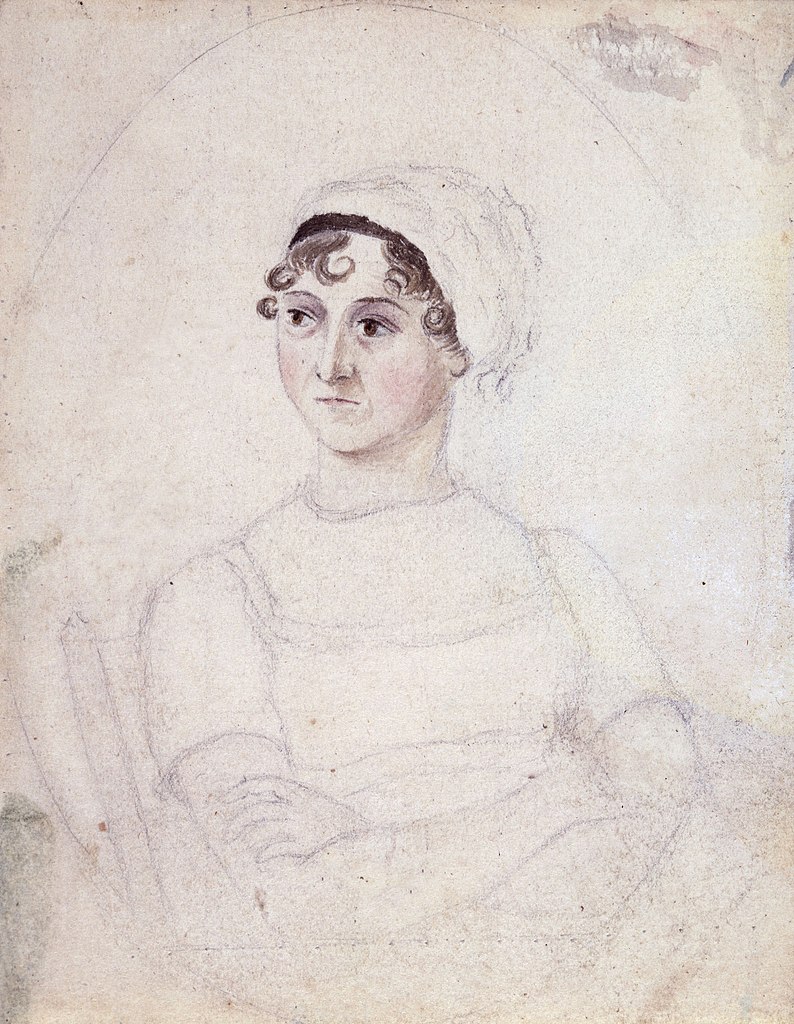
The most famous portrait of Jane Austen that you’re likely most familiar with is actually not likely a very accurate representation of her at all. It was sketched by her sister Cassandra, and Jane’s loved ones didn’t think it looked much like her. As it’s one of the only drawings done of her, however, it’s what we’ve come to picture her as today.
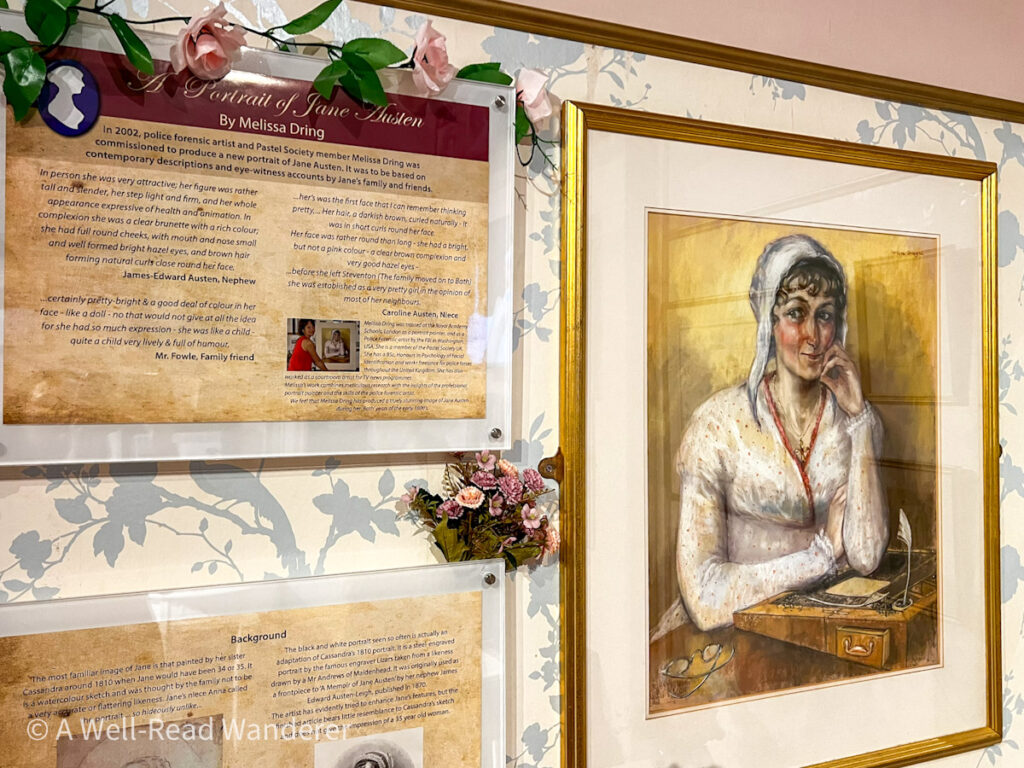
In 2001, the Jane Austen Centre in Bath commissioned a forensic sketch artist and professional portrait painter, Melissa Dring, to create as accurate a portrait as possible of Jane Austen.
In the process, Dring consulted the original portrait by Cassandra, considered physical descriptions of Austen by her family members, and studied portraits of the entire Austen family to identify family traits. She also consulted with regency experts and delved into Austen’s life to try to capture the personality and character of the woman.
The result is the first and only forensic portrait of Jane Austen, showing what she may have actually looked like. This is on display in the self-guided portion of the museum, so do be sure to keep an eye out for it.
Wax work of Austen
Years later, the Jane Austen Centre decided to take this supposedly realistic portrait of Austen and bring her to life in 3-D. They commissioned a sculptor together with an artistic support team to translate Dring’s forensic painting into a 3-D waxwork.
The resulting sculpture was unveiled at the Jane Austen Centre in July, 2014, and is the only one of its kind in the world. Visitors can check it out during their visit to the centre and even take their own photo with Austen.
Afternoon Tea at the Regency Tea Room
If you want to extend your experience at Bath’s Jane Austen Centre, you can book an afternoon tea on the top floor of the museum in their Regency Tea Room. You can choose from a variety of options, including:

- Afternoon tea with Mr. Darcy (a complete afternoon tea for very reasonable £26.50 per person)
- Jane’s Juvenilia Tea (a simplified afternoon tea for children)
- Miss Dashwood’s afternoon tea (sandwiches, scone, and tea)
- Lady Catherine’s Proper Cream Tea (scones and tea only)
- Mrs. Bennet’s cake of the day
- Toasted tea cake
I didn’t have time to test out the afternoon teas here, but the prices are very reasonable for an afternoon tea (definitely cheaper than the popular afternoon tea at the Pump Rooms!), and the views from the window are lovely. Plus, you’ll be enjoying tea with a portrait of Mr. Darcy (à la Collin Firth) overlooking you, which is delightful any way you slice it.
The tea room sources ingredients locally and has received a Tea Guild “Award of Excellence,” so I have every reason to believe this is a very nice afternoon tea option in Bath. As my plans didn’t allow time for it, I opted to buy some of their Jane Austen tea blend from the gift shop.
Related: Just two doors down from the Jane Austen Centre, you can find the Mary Shelley’s House of Frankenstein. This is a much newer addition to the city, but it’s a can’t miss spot if you’re a literature lover.
Important Things to Know & Tips for Visiting
Location: 40 Gay Street, Bath, United Kingdom

The Bath Jane Austen Centre is open year round, closed only on Christmas Day, Boxing Day, and New Year’s Day. Hours vary seasonally, so check their website for current hours.
- The museum is located in a historic Georgian row home and as such does not have a lift.
- Purchase tickets well ahead of time, especially if you’re visiting during the summer or during the Jane Austen Festival
- Allow yourself about an hour for your visit, plus time for tea if you have that scheduled
- While anyone can visit the museum gift shop, don’t forget to show your ticket from the tour, as it will get you 10% off your purchase and in the tea room on the top floor.
- If you want to enjoy afternoon tea, I recommend booking that in advance. Space is limited, and it’s unlikely you’ll be able to enjoy it without a prior reservation. I’d schedule it for about an hour after your tour time.
Verdict: Is the Bath Jane Austen Centre Worth Visiting?
Overall, I’d say the Jane Austen Centre Bath is a well-done museum that successfully honors one of England’s most beloved writers. If you have the time and the funds, I’d recommend including it in your Bath itinerary, assuming you are a Jane Austen fan.
I do think the regency tea room is a solid alternative to the Pump Room afternoon tea if you’re budget-conscious. While there’s less grandeur and ambience, it’s significantly less expensive and still offers a nice experience.
If you are debating between the Jane Austen Centre and the Jane Austen House in Chawton and can only visit one, I’d personally say the Jane Austen house is a more must-see attraction. However, Bath is so charming and worthwhile that you can’t go wrong with a trip here. And it’s definitely on my bucket list to make it during the Jane Austen festival one of these years.
If you’re on a strict budget and an avid Austenite, I think there’s still plenty to do in Bath for Austen fans that is free, so don’t feel bad if you can’t make it.
If you only have time to visit one writer’s museum in Bath and you’re equally a fan of Jane Austen and Mary Shelley, I’d slightly favor theMary Shelley House of Frankenstein as a more enjoyable experience. Obviously, if you’re a devoted Austen fan, then the Jane Austen Centre will win the day!
Where to stay nearby
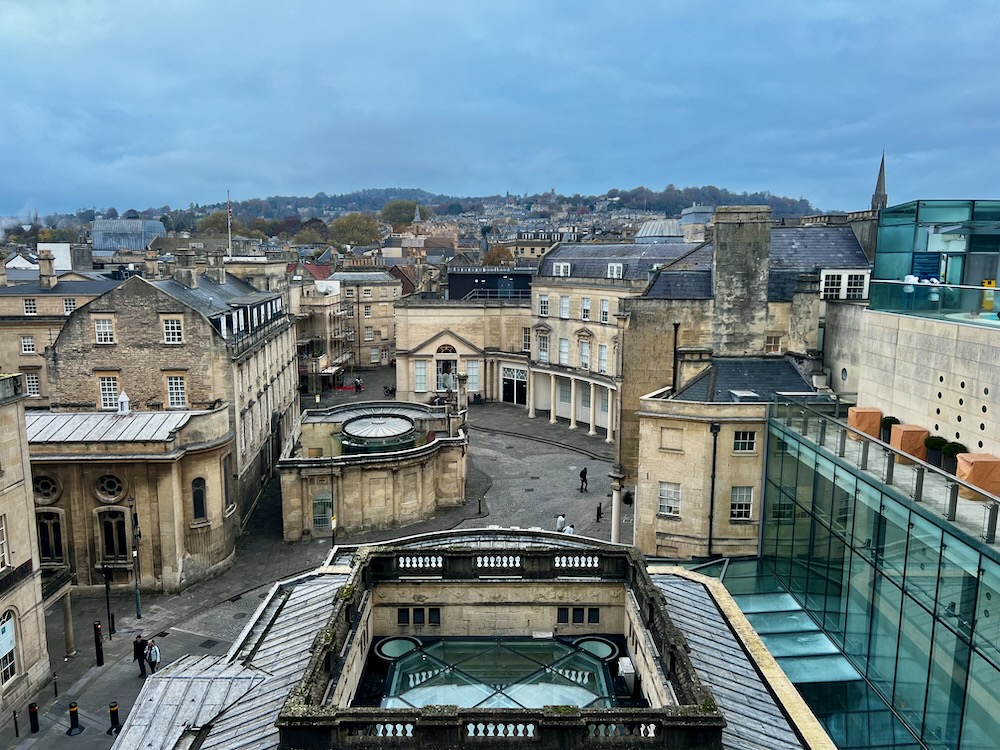
I thoroughly enjoyed my stay at the 5-star Gainsborough Hotel in Bath. It’s centrally located, so it’s easy walking distance to the Bath Jane Austen house as well as all the other Bath attractions you’ll want to check out. The suites are large and incredibly comfortable, and the service is exceptional.
As you look for somewhere to stay, I recommend checking for lodging on Hotels.com. I almost always book my accommodations through Hotels.com, because you can earn rewards for every night you stay without having to choose only one hotel chain to be loyal to. You can even book locally owned apart hotels and bed and breakfasts.
If you’re looking for privately owned vacation rentals, I recommend checking VRBO. I’ve personally had much better experiences with their owners and rentals than I have with their primary competitor.
Travel Resources At-A-Glance
All of the following are links to sites and services I actually use to book and plan my travel or to purchase books or travel gear.
For flights: Skyscanner is my number one go-to resource for booking flights. I love using the “explore” function to find the cheapest places I can fly during a given time or using the fare calendar to identify the cheapest days to fly.
For hotels and lodgings: For hotels, hotels.com, and for vacation rentals, VRBO.com. I’ve had much better experiences with private rentals through this website than through other popular private vacation rental websites.
For car rentals: Kayak allows comparisons across a wide range of booking agencies and lists reviews of companies as well. I’ve found this to be the most user-friendly and efficient way to compare car rental prices.
For tours & excursions: Viator and Get Your Guide are my top choices for booking excursions and tour experiences in a new destination.
For travel gear: Amazon.com and REI for more outdoorsy items. Check out my travel gear recs here.
For booking trains & buses: I find the Omio app and website to be the most easily navigable for comparing options for public transportation, especially in Europe,
Best travel credit card: My favorite travel rewards credit card for European travel has been the Chase Sapphire Rewards card. Visa is accepted just about everywhere in Europe, and there are no foreign transaction fees on the card. Some of the travel benefits I love on the Chase Sapphire include free TSA pre-check or Global Entry (worth it every time), an annual $200 travel credit, an annual $200 hotel benefit, built-in rental car, and trip insurance, and points are worth 50% more when used to book travel. I travel around Europe a LOT, and I end up with many free flights and hotel stays from using my points on my Chase Sapphire.
For books: Bookshop.org often has prices as good as Amazon or sometimes better, but profits go to indie bookstores all over the country. Whenever possible, consider buying your books from this online indie bookshop resource.
What other literary destinations are you curious to learn about? Feel to write me a note, and don’t forget to sign up for my newsletter.