


Dr. Johnson’s House: A Unique London Attraction for Bookworms
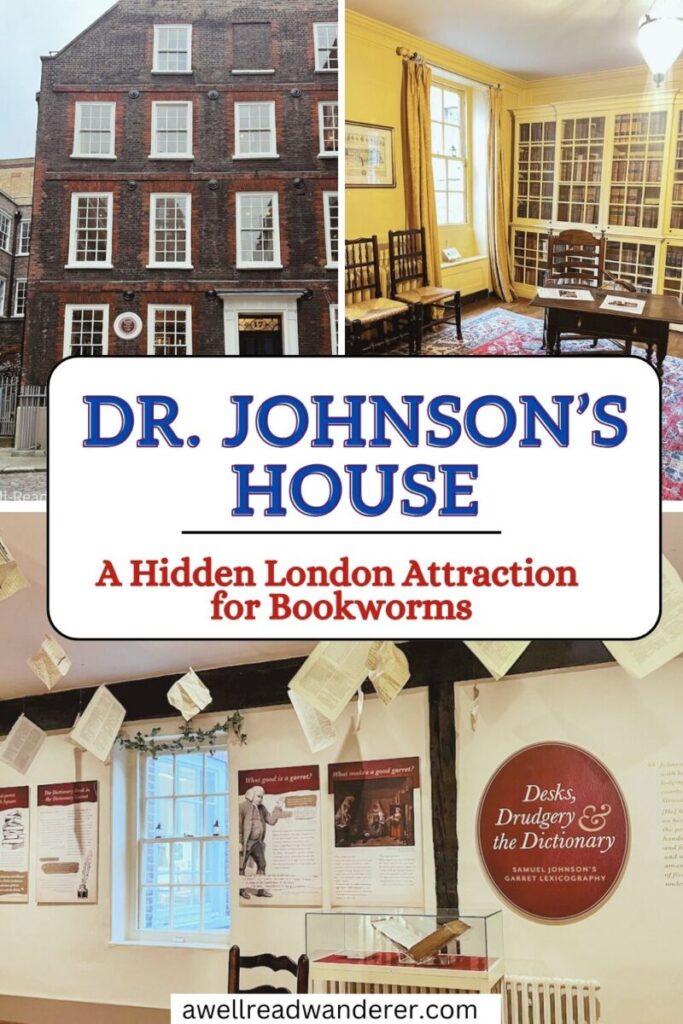
For book lovers in London, a visit to Dr. Johnson’s House is a great way to escape city crowds and explore a lesser-known literary destination.
I’m a literary travel expert who visits London multiple times a year, and I have to say that Samuel Johnson’s house where he worked on the first comprehensive English dictionary is a fantastic hidden gem.
At this unique museum, you’ll get a glimpse into his work process as well as his notorious wit. You can see his workplace where he compiled his famous dictionary and also learn a lot about the people in his life who were fascinating and influential but aren’t always recognized.
In this post, I’ll give you a brief overview of Samuel Johnson and the museum’s history. Then, I’ll let you know some of the highlights that make visiting this museum worthwhile and my personal tips for making the most of your visit.
Because overall, Dr. Johnson’s House in London is a fun, off-the-beaten-track literary museum in London that language lovers and history enthusiasts will really enjoy.
Don’t forget to pin this post for future reference, and sign up for my newsletter so you never miss out on hidden literary travel destinations, great indie bookstores, and my exclusive book recommendations from destinations around the world (long before I ever post about them here or elsewhere).
As always, this post may contain affiliate links, which means at no additional cost to you, shopping from them may generate small commissions to support the operations of this blog.
Whenever possible, I recommend buying books at local bookshops or through Bookshop.org, because shopping there puts the profits right into the hands of indie bookstores all over the country.
A Quick History of Dr. Johnson’s House
The home in which Dr. Samuel Johnson lived while working his dictionary is a historic building with all the appropriate quirks and nuances that come with that. It’s a timber-framed brick townhouse that would be easy to walk right by without realizing its significance.
The building itself was already plenty old before Dr. Johnson moved in. It dates back to the 17th century and is the only remaining building in what was a complex of buildings built by Richard Gough.
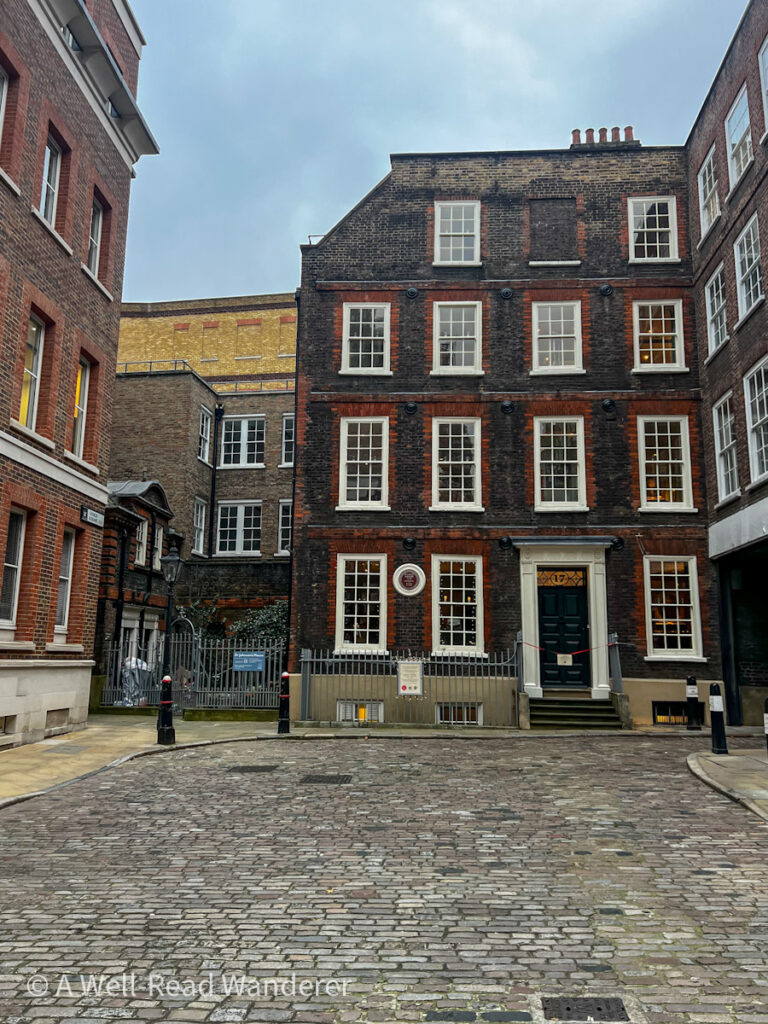
Samuel Johnson lived at 17 Gough Square from 1748 – 1759, at first with his wife Tetty. After her death, he brought in Francis Barber, a former enslaved person from Jamaica, to be a live-in servant.
(If you’re not familiar with Francis Barber’s story, you will love learning about him at the museum. He and Johnson developed a very close relationship. Barber studied to become an apothecary, served in the British navy, and was the first documented Black schoolmaster in England. The two men were so close that Johnson named him his heir in his will).
During his time at 17 Gough Square, Dr. Johnson finished his work on A Dictionary of the English Language (published in 1755), the first comprehensive English dictionary.
After his tenancy ended in 1759, the house served various purposes, including as a lodging house, a hotel, and a printer’s workshop (rather appropriate). In 1918, it first opened to the public as a museum, though during WWII it served as a canteen and watch tower for soldiers.
Dr. Johnson’s home didn’t survive the war intact – the garret where Johnson worked was badly damaged, but ultimately, the house was saved from any lasting damage and lovingly restored in the following years.

The museum today can be found in an unassuming courtyard off of Fleet Street. It’s run by a small charity called the Dr. Johnson’s House Trust, which seeks to preserve Johnson’s legacy. In 2023, they gained a prominent patron in Stephen Fry (who also happens to be one of the best audiobook narrators and the author of some of great Greek mythology retellings).
“I have long admired the work, life and achievements of Samuel Johnson: the single-handed production of a comprehensive – and often hilarious – dictionary stands, among many other notable works, as a high point in our literary history. I am delighted and very honoured to become Patron of Dr Johnson’s House.’”
Stephen fry, patron of dr. johnson’s house
Following the instructions of the museum’s founder, Cecil Harmsworth, Dr. Johnson’s House doesn’t have the feel of a “stuffy museum,” but of a home. They host regular tea parties, dinner parties, and even gin tastings, and the house furnishings remain true to the time period when Johnson lived there.
Related: Dr. Johnson’s house is not too far from the start of the London Literary Pub Tour, which is a great choice for bookworms in London. Plus, if you visit the museum first, you’ll be able to impress everyone on the tour by answering all the questions your guide poses about Dr. Johnson.
Why Samuel Johnson’s Dictionary Matters
Why was Samuel Johnson’s dictionary so monumental that we would visit a museum dedicated to him and the remarkable feat? It was the first comprehensive English dictionary ever published, and though Johnson did have apprentices helping him assemble the dictionary, it was largely the feat of one man to research over 42,000 words and provide multiple definitions as well as a literary quotation for each (often, these showed Johnson’s famous sense of humor).
“In the whole tradition of English language and literature the only dictionary compiled by a writer of the first rank is that of Dr Johnson. Unlike other dictionaries, Johnson’s is a work of literature.”
Robert Burchfield
It took Samuel Johnson 9 years to compile the dictionary, though the work was never really completed. He continued to improve and update the dictionary for future editions for the rest of his life.
It may gratify curiosity to inform it, that the English Dictionary was written with little assistance of the learned, and without any patronage of the great; not in the soft obscurities of retirement, or under the shelter of academick bowers, but amidst inconvenience and distraction, in sickness and in sorrow.“
Preface, Dictionary of the English Language, 1755
Related: During your trip to London, you should also make time to visit the Charles Dickens Museum and the Sherlock Holmes Museum, both some of my London literary favorites.
Visiting Dr. Samuel Johnson’s House
To visit Dr. Johnson’s House, you’ll enter a rather hidden courtyard off of Fleet Street and look for the corner house with the museum signage. The entrance is at a side door of the building, not through the front door.
You’ll enter right into the museum gift shop, where you can buy your ticket (no need to book ahead of time). It’s usually a volunteer working this desk, and at my visit, he was clearly really enthusiastic about the museum and sharing about Samuel Johnson’s history.

He engaged me in conversation immediately, telling me some of the fun facts he’s learned about the house and the man, and was excited to tell me even more as I was leaving and purchasing my souvenir.
After buying your ticket, you’ll be free to explore the four floors of the home at your own pace. As much of Johnson’s personal belongings were lost in the years following his death, there’s not a lot of his original furniture or belongings, though the pieces you’ll see are from the same time period when he lived there.

While there’s no audioguide, plaques and informational pages can be found in each room of the museum, offering every detail you could ever want to know about the artwork and furniture as well as the people who would’ve occupied those rooms.
The effect is that it’s possible to have a very educational experience in the Samuel Johnson House, though you’ll be in charge of just how much you read and learn during your time there.
They rather cleverly mount some choice definitions from Dr. Johnson’s dictionary around the house where they most fit in, which is a clever way to pay homage to his most famous work during your visit.

Here are some of the highlights of what you can see at Dr. Johnson’s House:
The Library
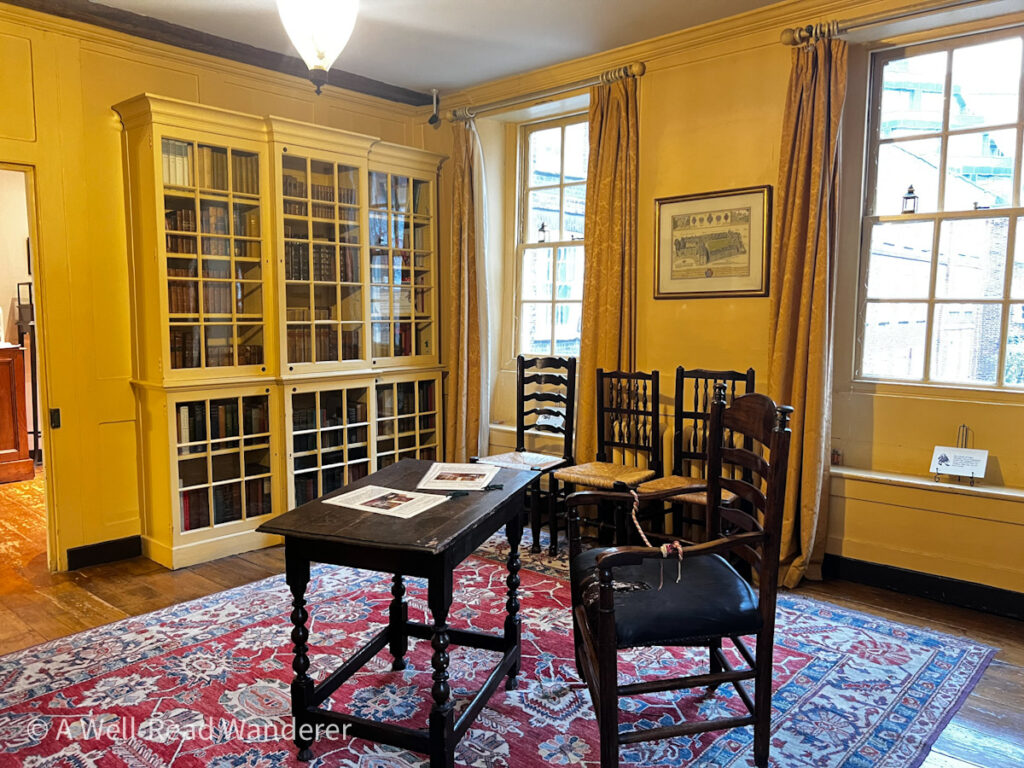
Keep in mind that while Dr. Johnson’s home in London is outfitted with period-appropriate furnishings, it’s not set up to mimic exactly the way it was when Johnson lived there. So when you visit the library room in the museum, you’ll learn that it may actually have been Samuel’s bedroom.
Johnson read extensively, which makes sense as he needed to research and understand the many uses of over 40,000 English words. His personal library was said to contain around 3,000 volumes, but he was notoriously rough with his books.
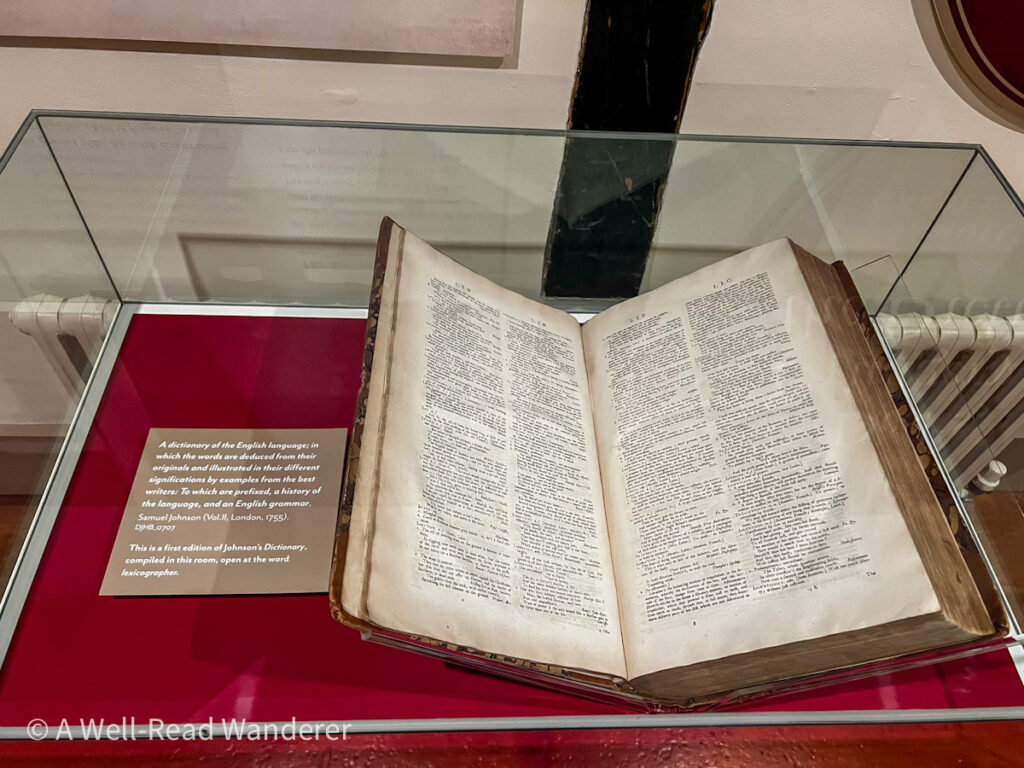
In the library, you can read the informational materials documenting his rough usage of books, including those he borrowed from friends — Boswell lent him a book and got it back covered in pencil markings and crumbs.
In the library, you can search for the two books that were actually owned by Johnson himself as well as a copy of one of the first editions of the Dictionary of the English Language he published in 1755 (one of only 2,000 copies).
The Garret
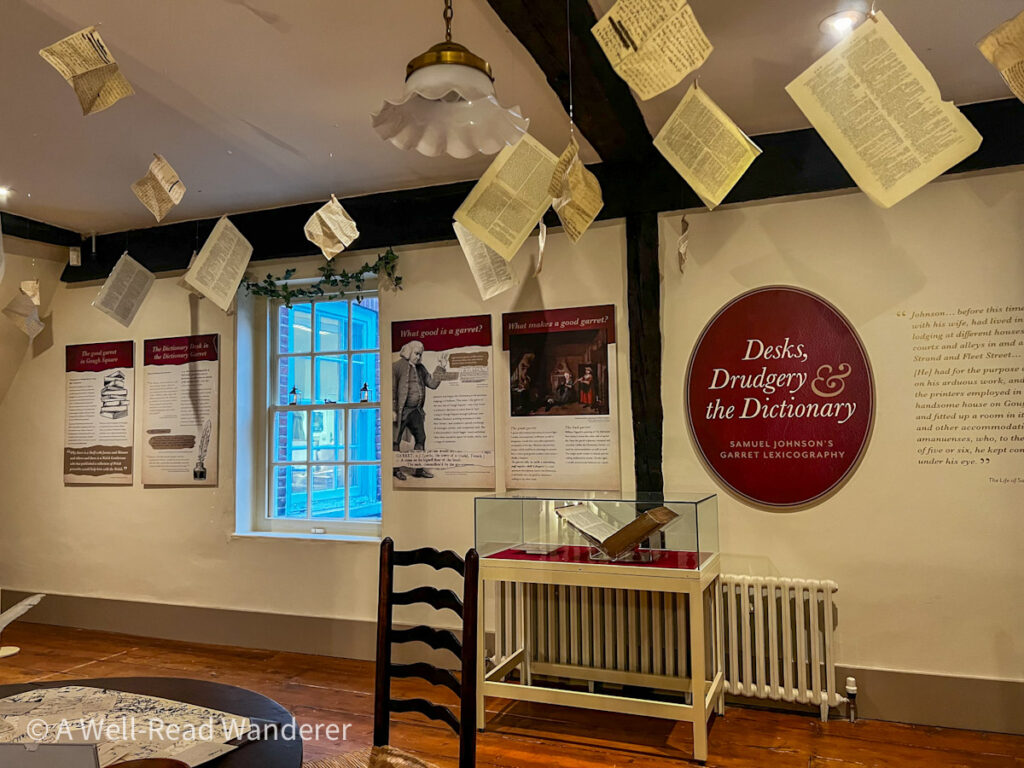
While each floor of Dr. Johnson’s House contains much to explore, the real highlight of the museum is the garret on the top floor of the house. This was the primary reason Johnson chose this home to rent as he was working on his dictionary — to use the spacious top floor as his office.
It’s bright and spacious with plenty of room for him to work alongside his range of assistants.

In the garret, you can see what may be one of Johnson’s only remaining original items of furniture — his “dictionary desk.” You can read all about the arguments for and against it being the original and weigh on by casting your ballot with quill and ink before you leave the top floor.
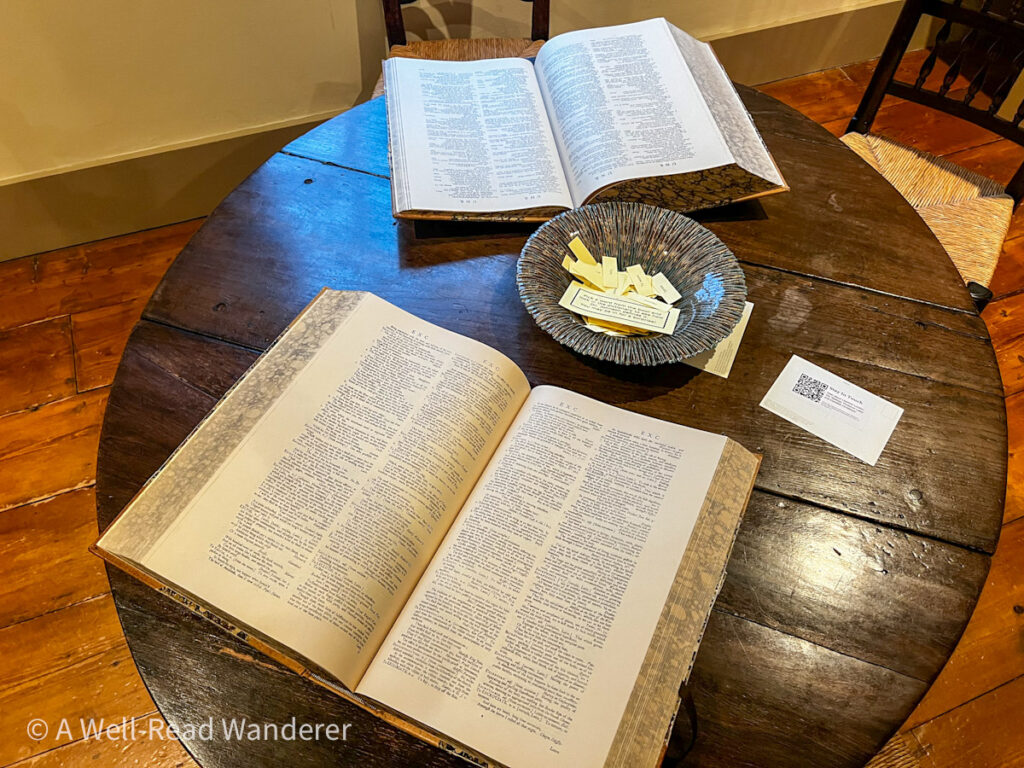
You can also flip through replicas of the first edition of Johnson’s Dictionary of the English Language. There are slips of a paper on a table with suggested words to choose from, so you can get the feel of looking them up for yourself.
Related: Check out my complete guide to literary tours in London. In it, I round up all the top guided tours you can join while in the city, with my personal experiences, visitor reviews, availability, time commitment, and approximate cost, all in one place.
Costume Dress Up
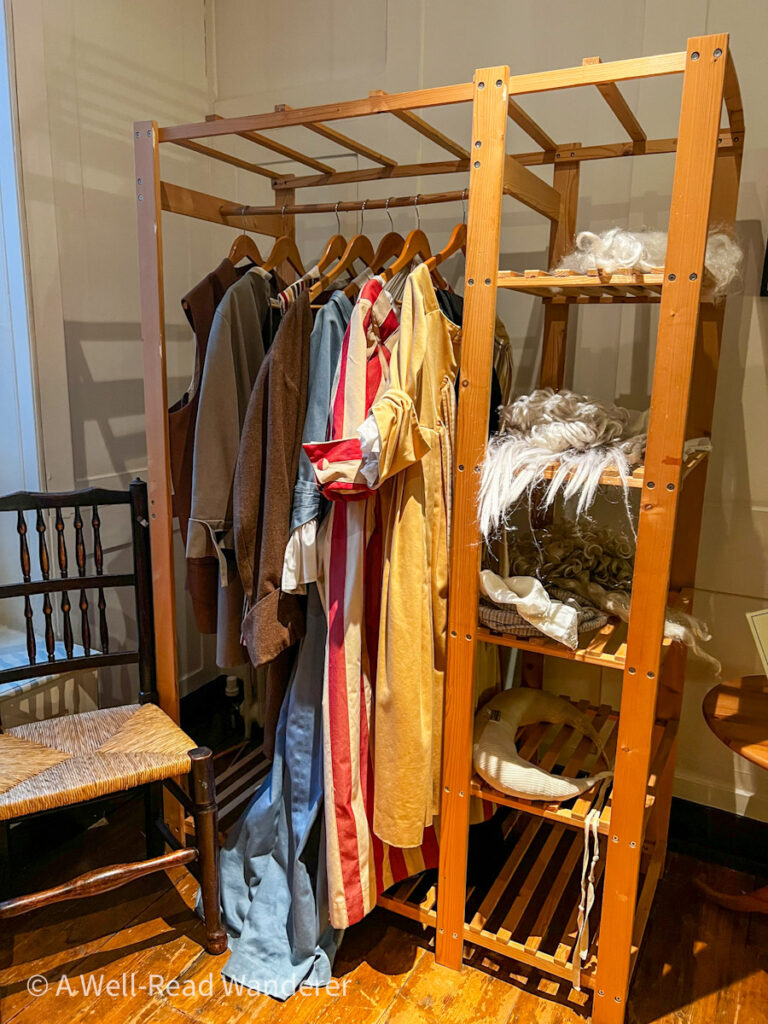
If you enjoy dressing up in period costume when you visit historic sites, you’re in luck here. On one of the stairwell landings, there’s a selection of 18th century costumes and wigs for men and women alike, which you can dress up in and photograph yourself to your heart’s content.
Related: If you’d like to go a little further back in time, you can dress up in regency attire and have a photo shoot at Pemberley at the Jane Austen Centre in Bath, only 1.5 hours away by train.
The Gift Shop

Of course, try to support the museum by finding something to enjoy from the gift shop on your way in or out of Dr. Johnson’s House. For me, I opted for a Samuel Johnson tea towel as a nod to his obsession with tea, which you’ll learn about in the museum (it’s an obsession we both happen to share).
The prices are very reasonable, and like most places in London, you can use Tap to Pay.
Related: Looking for the best places to enjoy afternoon tea in London? Afternoon tea at the Library is my first pick. However, there’s lots of themed afternoon teas in London, includings ones inspired by famous London writers and novels.
Hodge the Cat’s Statue
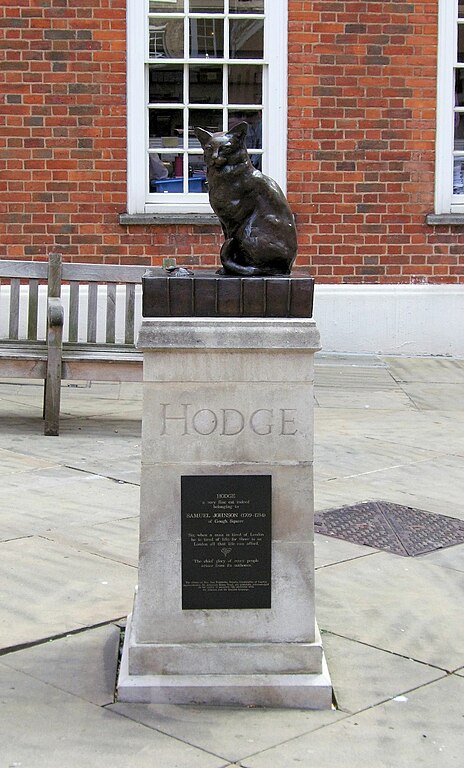
While it’s not technically found inside the museum, you won’t want to miss a visit to the statue of Hodge the Cat in Gough Square. You’ll find him sitting atop a copy of Johnson’s dictionary with some oysters, his favorite food, which Johnson would go and buy especially for him.
This is a fun tribute that fellow animal lovers will appreciate. Johnson was notoriously fond of cats.
Verdict: is the Samuel Johnson House worth visiting?
For anyone interested in language, literature, or history, Dr. Johnson’s House in London is absolutely worth a visit. It’s often overlooked in favor of some of London’s more famous literary museums, but I think it’s a shame to miss in your London itinerary.
It’s thoroughly enjoyable, allowing you to read as much or as little historical information as you like, but it’s hard to leave without having chuckled at least once and learned at least one new fact. Those with an appreciation for humor and wit will enjoy discovering the many witticisms of Johnson’s that are placed around the house, and the garret is a place that really leaves an impact.
Plus, I appreciate the museum’s balanced and nuanced approach to how it presents history. For example, ample credit and space are given to influential figures behind the famous Dr. Johnson, such as his wife Tetty, the lesser known female writer Elizabeth Carter, and of course his servant and friend Francis Barber.
The museum also refrains from deifying the man, reliably pointing out things that were problematic about his life, habits, or words. For example, they point out that his otherwise charming tea addiction was not unproblematic, in that at the time the tea industry played a part in fueling the international slave trade.

Related: Bookworms will also enjoy taking a day trip to Lewes, UK. There, you can visit the stunning country home of Virginia Woolf, Monk’s House, one of my favorite literary destinations I’ve ever visited.
Tips for Visiting
- As you make your way through the house, keep an eye out for quirky elements to this old house, including lots of hidden cabinets you can peek into. (If that’s something you enjoy, you will appreciate a visit to Sally Lunn’s historic eatery in Bath, where they discovered a secret recipe in a hidden cupboard). You can also check out the original grille over the window of the front door (installed to keep thieves from lowering children into the house).
- A visit to Dr. Johnson’s House involves climbing quite a few stairs with no option of a lift
- They’re happy to store your coat, umbrella, and even bags in the front room of the museum free of charge.
- There’s no need to book your ticket in advance, so you can fit it into your schedule last minute at any point.
- Keep an eye out for special events like gin tastings and museum lates.

Practical information
Location: 17 Gough Square, London EC4A 3DE
Open: Tuesday through Saturday from 11 am – 5 pm, closed for major holidays and occasionally for events. Check the official website to verify times.
Tickets: £9 for adult admission, with discounts for students and children
Other things to do in London for Book Lovers
London is one of the best cities in the world to visit if you’re a book lover. In addition to countless amazing indie bookshops in London, there’s also lots of literary museums, tours, and activities.
Here are a few suggestions, for which you can check out my complete guides:
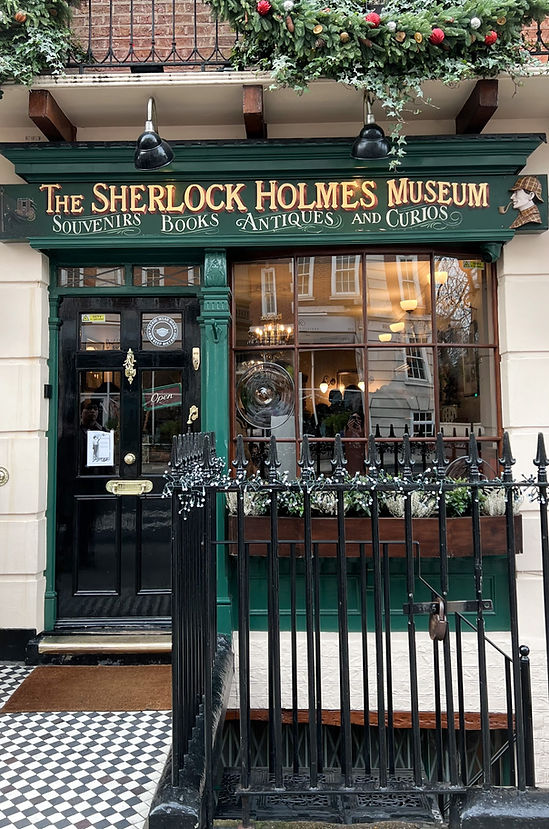
- The Charles Dickens Museum where the author lived and wrote many of his bestselling novels
- The Sherlock Holmes Museum, a recreation of Sherlock and Watson’s fictional Baker Street apartment
- Take the Literary London Pub Tour, a unique and unforgettable night on the town with a literary twist
- For Harry Potter fans, a complete list of Harry Potter things to do in London
- How to visit the Globe Theatre (all your options, detailed)
Travel Resources At-A-Glance
All of the following are links to sites and services I actually use to book and plan my travel or to purchase books or travel gear.
For flights: Skyscanner is my number one go-to resource for booking flights. I love using the “explore” function to find the cheapest places I can fly during a given time or using the fare calendar to identify the cheapest days to fly.
For hotels and lodgings: For hotels, hotels.com, and for vacation rentals, VRBO.com. I’ve had much better experiences with private rentals through this website than through other popular private vacation rental websites.
For car rentals: Kayak allows comparisons across a wide range of booking agencies and lists reviews of companies as well. I’ve found this to be the most user-friendly and efficient way to compare car rental prices.
For tours & excursions: Viator and Get Your Guide are my top choices for booking excursions and tour experiences in a new destination.
For travel gear: Amazon.com and REI for more outdoorsy items. Check out my travel gear recs here.
For booking trains & buses: I find the Omio app and website to be the most easily navigable for comparing options for public transportation, especially in Europe,
Best travel credit card: My favorite travel rewards credit card for European travel has been the Chase Sapphire Rewards card. Visa is accepted just about everywhere in Europe, and there are no foreign transaction fees on the card. Some of the travel benefits I love on the Chase Sapphire include free TSA pre-check or Global Entry (worth it every time), an annual $200 travel credit, an annual $200 hotel benefit, built-in rental car, and trip insurance, and points are worth 50% more when used to book travel. I travel around Europe a LOT, and I end up with many free flights and hotel stays from using my points on my Chase Sapphire.
For books: Bookshop.org often has prices as good as Amazon or sometimes better, but profits go to indie bookstores all over the country. Whenever possible, consider buying your books from this online indie bookshop resource.
What other cities are you looking to visit and wondering the best activities for book lovers?
Don’t forget to pin this post for future reference!


