

Every Jane Austen Sight in Bath: Your Essential Guide
For fans of Jane Austen, Bath, England is a must-do literary pilgrimage.
Jane Austen lived in Bath off and on from 1801-1807 at a number of residences throughout the city. She also set two of her novels in Bath (Northanger Abbey and Persuasion), so it is teeming with locations connected both to the author’s life and to memorable scenes from her books.
Amazingly, the Georgian architecture that dominated the city when Jane lived in Bath has remained largely unchanged. The result is that you can walk around Bath today and effortlessly imagine yourself transported back to Austen’s time, seeing the same sights, walking the same streets, and going to many of the same attractions she did.
As a dedicated literary traveler, I have had the chance to visit Bath more than once and explore the many attractions it has to offer Jane Austen fans. In this post, I’ll tell you all the things that should be on your Bath itinerary if you’re a Jane Austen fan as well as my personal insights for what to prioritize and how to get the most out of your time.
Trust me, for a Jane Austen fan, there’s enough to do to fill an entire weekend in Bath, and then some! So let’s dive in.
Disclaimer: I received free admission to museums in Bath courtesy of Visit Bath. All opinions are my honest thoughts.
As always, this post may contain affiliate links, which means at no additional cost to you, shopping from them may generate small commissions to support the operations of this blog.
Whenever possible, I recommend buying books at local bookshops or through Bookshop.org, because shopping there puts the profits right into the hands of indie bookstores all over the country.
Austen-related Sites in Bath
Just about every street and building in Bath has some connection to Jane Austen, but let’s focus on those with the strongest so you can maximize your time and enjoyment in the city.
The Pump Room and Roman Baths
The Pump Room in Bath was one of the central locations in Bath society in Jane’s time. In the novel Northanger Abbey, the Pump Room is the place where “every creature in Bath was to be seen in the room at different periods of the fashionable hours. Crowds of people were every moment passing in and out, up the steps and down.”

The Pump Room of today still resembles what it would have looked like when Austen lived in Bath and when her characters frequented it. It was built in its present form in 1795 and is remarkably well-preserved.
In Northanger Abbey, Catherine Morland and Isabella Thorpe join in with all of Bath’s genteel society in walking the Pump Rooms every day.
Today, you can check out the Pump Room restaurant and tea room, an elegant affair where you will be serenaded by live music (either a pianist or a strings trio) as you imagine yourself sitting there with Catherine and Isabella over a hundred years ago.
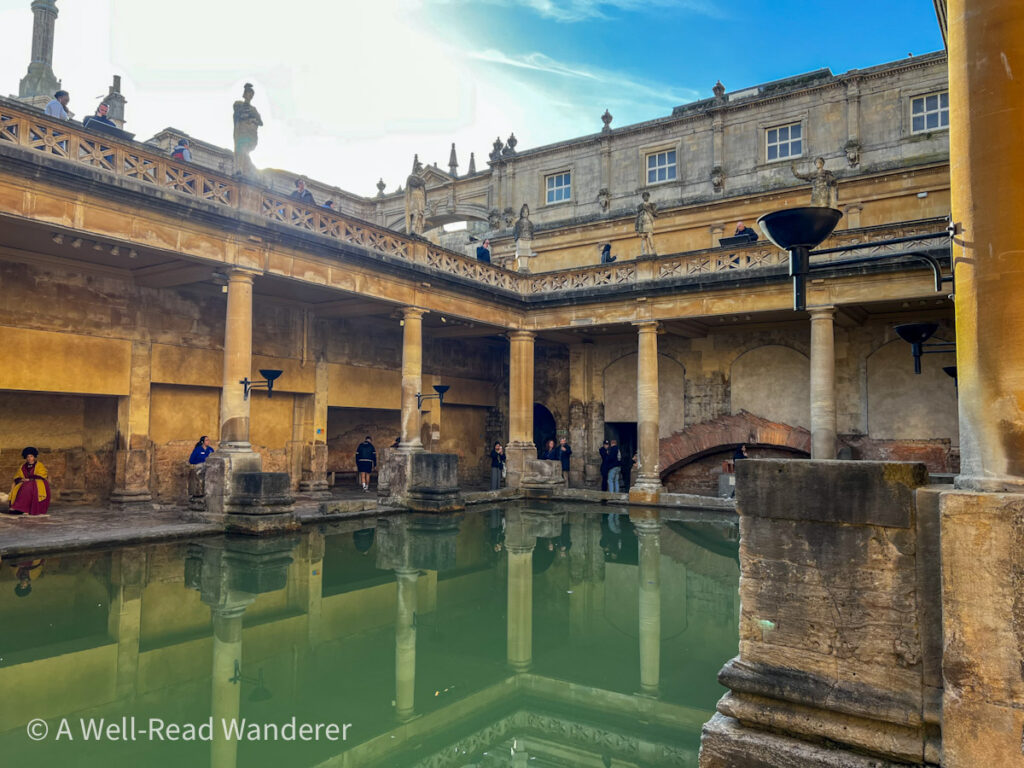
You can enjoy a meal at the Pump Room or an afternoon tea and pair it with a visit to the Roman Baths next door. These were also important during Jane’s time, as doctors often prescribed people to “take the waters.” The natural hot springs were believed to have healing properties, so people would bathe in as well as imbibe the mineral waters.

You can even try the water for yourself at both the Pump Room and the Roman Baths. Be warned – the water is very warm and has a distinctly mineral flavor.
Options for visiting:
- Self-guided tour of the Roman Baths
- Or audioguide
- Or guided tour
- Have a meal or afternoon tea at the Pump Room
- Buy a combo ticket
The Pump Room can cater to gluten-free, pescetarian, vegetarian, nut-free, dairy-free, and vegan diets and is an allergy-friendly restaurant.
I have visited the Roman Baths twice now, and I can say they are worth checking out. The museum you pass through first is interesting, but if you’re primarily interested in the baths themselves, you can skim through it pretty quickly and make straight to the baths, which you can observe from the upper and lower levels.
When I visited in 2024, there was even a woman in Regency attire strolling around the floor and interacting with guests. During the Jane Austen festival, they do have costumed events at the Pump Rooms as well.
Unfortunately, I had to cancel my reservation for afternoon tea in the pump rooms due to illness, so I can’t report on it personally as yet. However, those who have gone uniformly praise the experience.
Location: Searcys at the Pump Room, Stall St, Bath; Abbey Churchyard, Bath
The Assembly Rooms
The Bath Assembly Rooms have been around since 1771, and Jane would’ve attended many events and balls there during her Bath residency. Upon opening, they quickly became one of Bath’s chief entertainment destinations and hosted balls, concerts, or card games nearly every night of the week.
There are four rooms here, each with a unique name and purpose: the Octagon Room, Tea Room, Ball Room, and Card Room.
In Austen’s novels, these rooms are referred to as the “Upper Assembly Rooms,” and it’s where Catherine Morland meets with the Thorpes in Northanger Abbey and where she and Mrs. Allen fight the crowds of people just to catch a glimpse of those lucky enough to be dancing.
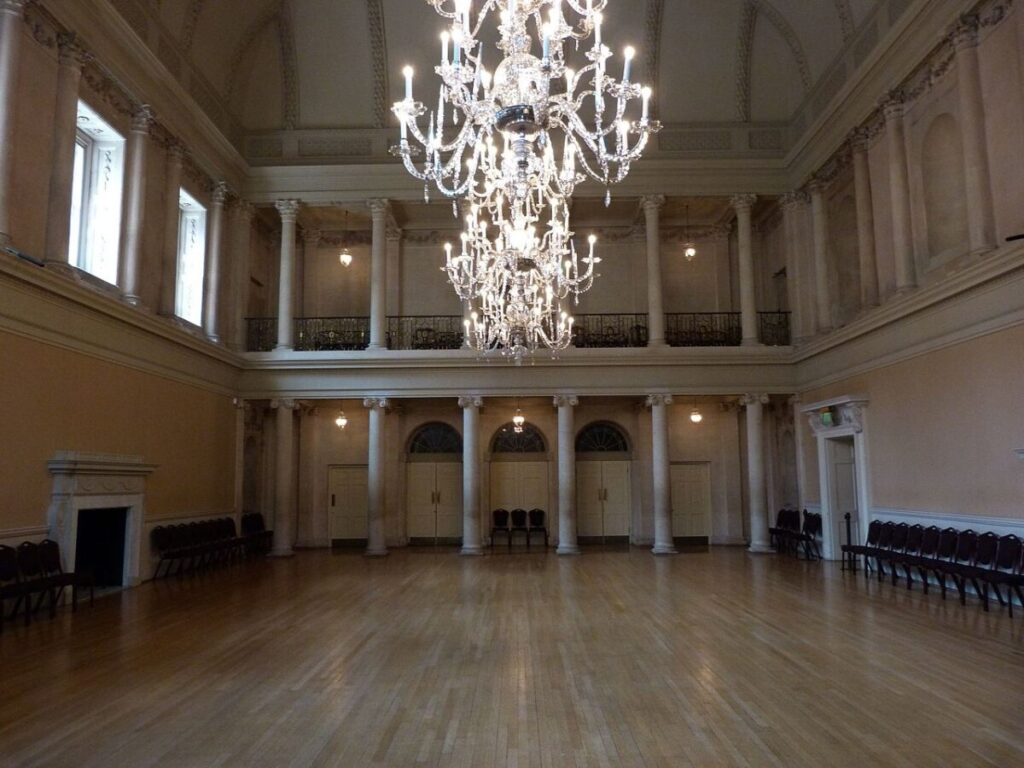
Note: Northanger Abbey frequently mentions the “Lower Assembly Rooms,” but these no longer exist. It’s a shame, as we’ll never get to see the room in which Catherine Morland and Henry Tilney first meet.
The Assembly Rooms are currently undergoing renovations through 2026, so they are largely closed to visitors at the present time. Among the renovation plans will be installation of projectors to create the scene of a Georgian ball.
Make sure you check the Assembly Rooms website before you visit. Odds are, they won’t be open, but they are planning to occasionally reopen for special events in 2025, likely in connection with the Jane Austen Festival and other significant occurrences.
Tip: There are usually several Regency balls held at the Assembly Rooms throughout the year, but these are popular, so sign up as soon as tickets open! I tried to get tickets to a ball last year, but it sold out within the first eight minutes.
Location: Bennett St, Bath
Related: One of the best places to find some great Bath souvenirs are at its many bookshops! I’m not lying when I say Bath has some of the best indie bookstores in the world.
Jane Austen Centre
Of course, the number one attraction for Jane Austen fans in Bath is the Jane Austen Centre, which has been a beloved literary museum in Bath for more than two decades. It’s situated in a Georgian row home on Gay Street, just a few doors down from one of the homes in which Austen stayed during her time in the city.

Unlike the Jane Austen house in Chawton, this museum is not intended to recreate her living situation, but rather a museum dedicated to bringing to life Jane Austen as she really was and also Bath in the Regency period.
You’ll get to try on Regency attire and take a photo with Mr. Darcy, interact with costumed characters, and try your hand at popular Regency era games. You can also book an afternoon tea on the top floor in their Regency Tea Room.
I think a visit here is a fun way to celebrate the writer and the influence of Bath on her novels. Make sure to read my complete write-up on the Bath Jane Austen Centre before going.
Location: 40 Gay St, Bath
Sally Lunn’s Historic Eating House
Ever wondered what sorts of places Jane Austen would’ve eaten when she lived in Bath? You’ll definitely want to check out Sally Lunn’s while you’re visiting. It’s an eatery housed in the oldest building in Bath, dating back more than 500 years, so it still looks as it would’ve when Jane lived here.

What makes it most famous, though, is it’s widely acknowledged as the inventor of the famous Bath Bun, an enormous, round roll commonly eaten with tea. Jane Austen herself, while she never mentioned Sally Lunn’s specifically, did write to her sister, Cassandra:
“I shall not like being left behind;…I will endeavour to make the difference less by disordering my Stomach with Bath bunns;”
Jane Austen to Cassandra on January 3, 1801
Today, Sally Lunn’s serves Bath buns made using the baker’s original recipe, which they discovered in a secret cupboard inside the building. It’s a closely held secret — out of curiosity, I questioned my server if she was privy to the recipe and she said no, only the four bakers who make the buns see the recipe, and she believes they sign an NDA.
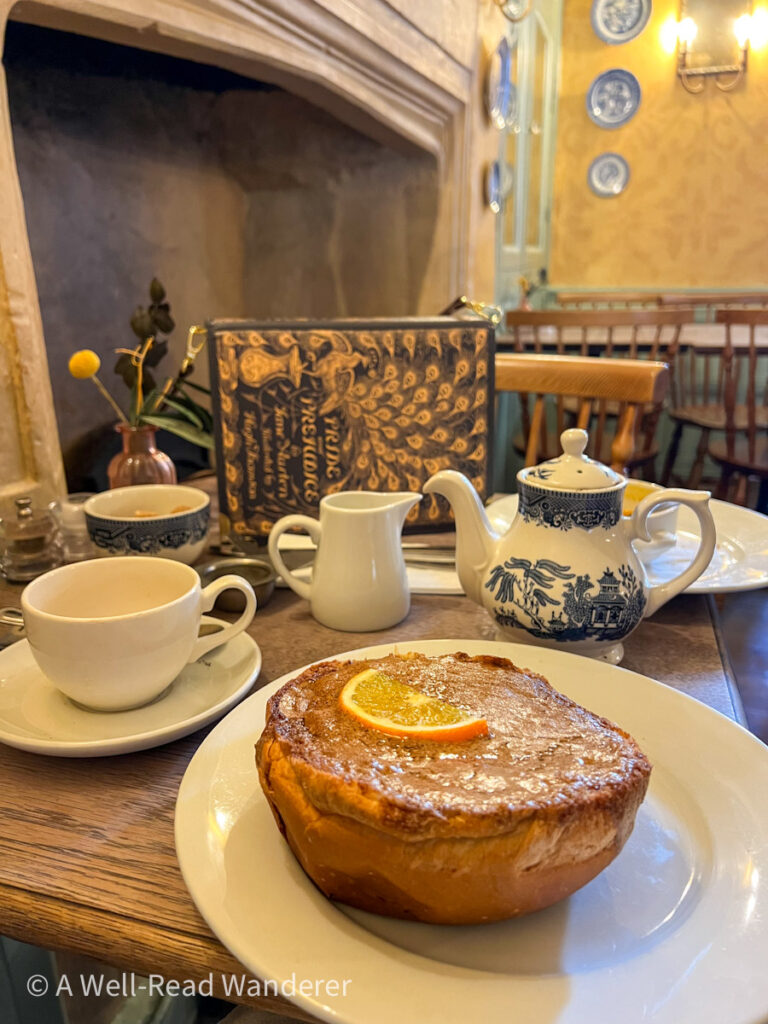
During my visit in one of the yellow-papered, low-ceilinged dining room upstairs, I tried Bath buns two different ways — plain with butter on the side of one of their house soups, and with cinnamon butter on top. While they were both delicious, I’d say the cinnamon buns are best for those with a STRONG sweet tooth. I couldn’t eat very much of it, though it was very tasty. However I ate every crumb of the Bath bun that had butter only; it was perfectly toasted and simple but so satisfying.
These days, the buns are made in an off-site kitchen warehouse and brought fresh to the restaurant daily, where they are toasted upon ordering. But you can visit the small basement room free of charge and see a life-sized diorama of Sally Lunn in her historic kitchen.
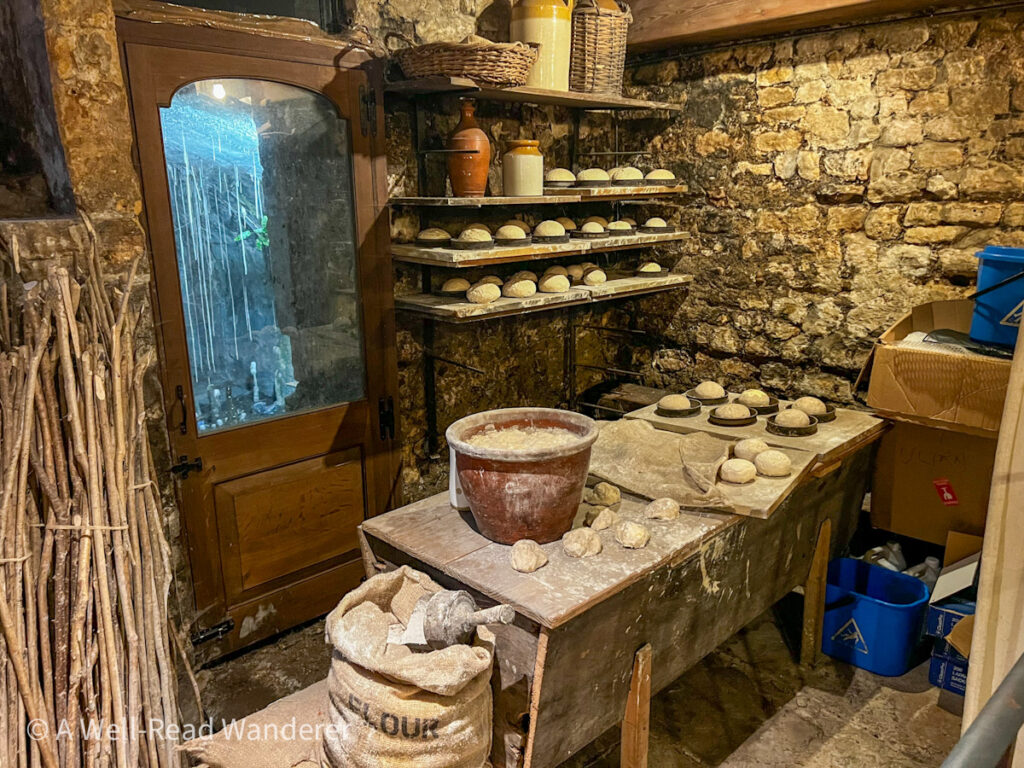
Sally Lunn’s is a great place to enjoy lunch or dinner, and it’s even an affordable alternative to the Pump Rooms for an afternoon tea.
Location: 4 N Parade Passage, Bath
The Gravel Walk
If you haven’t read Persuasion and don’t want the ending spoiled for you, consider yourself warned, and go ahead and skip this section of the post.
At the memorable end of Persuasion, Captain Wentworth hands Anne a letter (oh! What a letter! Was there a more romantic letter ever written?), and she chases after him (in the most dignified of manors, of course). A proposal immediately follows, and the worthy pair of lovers go for a gleeful walk on “the gravel walk” in Bath.
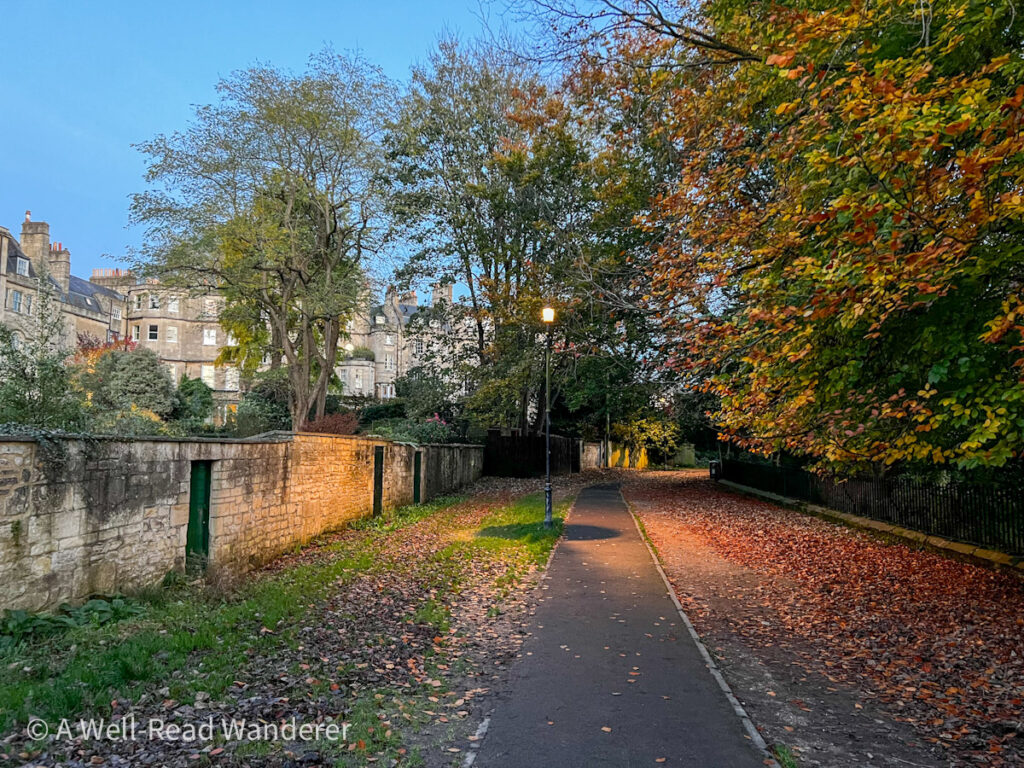
Did you know that this seemingly vague reference is actually referring to a real walkway in Bath, one that exists to this day? During your stay in Bath, perhaps around dusk, enjoy walking the Gravel Walk yourself toward or away from the Royal Crescent and think on the happiness of Anne and Wentworth.
“There on the Gravel Walk we returned again into the past, more exquisitely happy, perhaps, in our reunion, than when it had been first projected; more tender, more tried, more fixed in a knowledge of each other’s character, truth, and attachment; more equal to act, more justified in acting. And there, as we slowly paced the gradual ascent, heedless of every group around us, seeing neither sauntering politicians, bustling house-keepers, flirting girls, nor nurserymaids and children, we indulged in those retrospections and acknowledgments, and especially in those explanations of what had directly preceded the present moment, which were so poignant and so ceaseless in interest.”
Persuasion by Jane Austen
Location: from the corner of Brock St and Upper Church St to the Queen’s Parade Pl.
The Circus & The Royal Crescent
Two of the most iconic locations in Bath have plenty of Jane Austen tie-ins, too. The Circus and the Royal Crescent are immediately recognisable for their rounded, 18th century row homes, each forming a circle around a common green space.
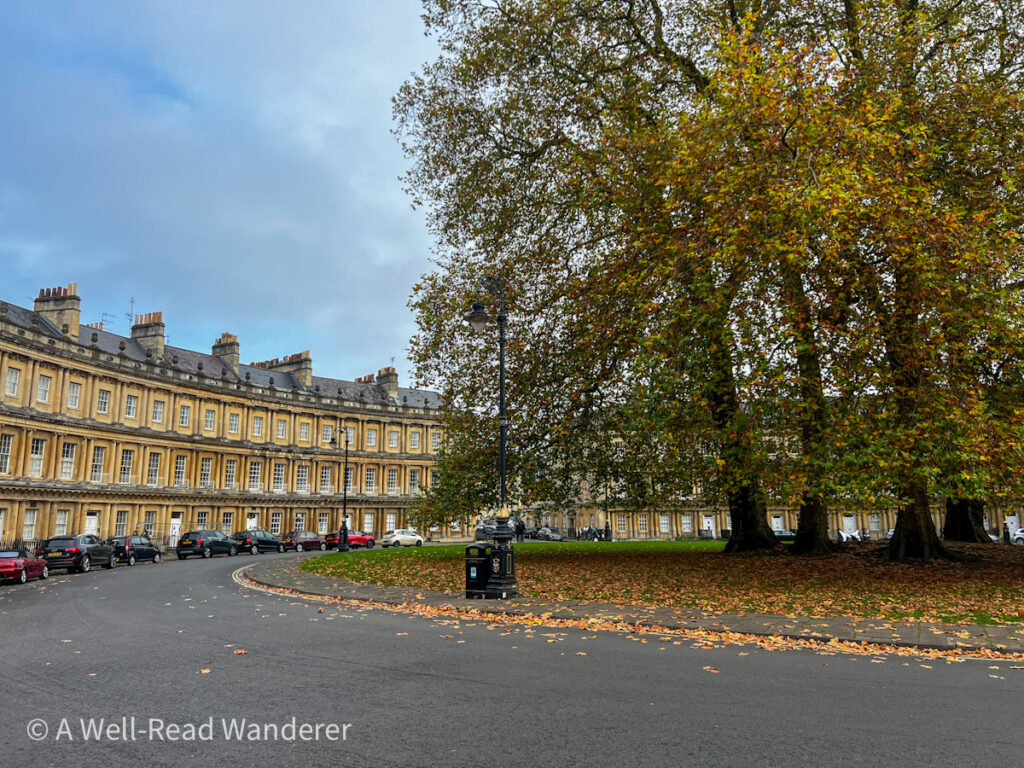
During her time in Bath, Austen visited friends who lived at No. 11 in the Circus.
The much larger Royal Crescent is the location of several scenes in Austen’s novels, including when Mrs. Allen meets the Tilneys. It’s also a popular filming spot for period pieces, including the 2007 Persuasion series and more recently, the Bridgerton TV series.
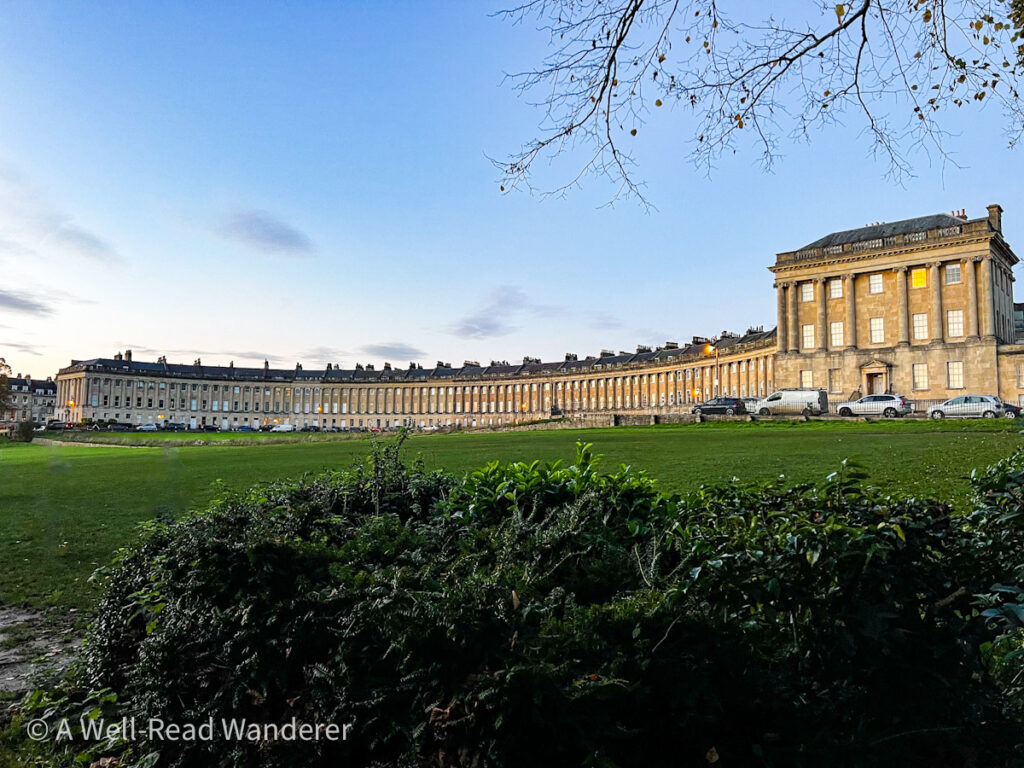
If you have time, you can pop into No. 1 Royal Crescent, now home to a Georgian life museum (you may also recognize the exterior as the home of the Featheringtons in Bridgerton).
I didn’t prioritize this museum during my most recent weekend visit, but it might be a nice addition to your Bath itinerary if you are spending more than a couple of days there. But whether or not you visit the museum, you won’t want to miss strolling along these two remarkable spots.
Pulteney Bridge

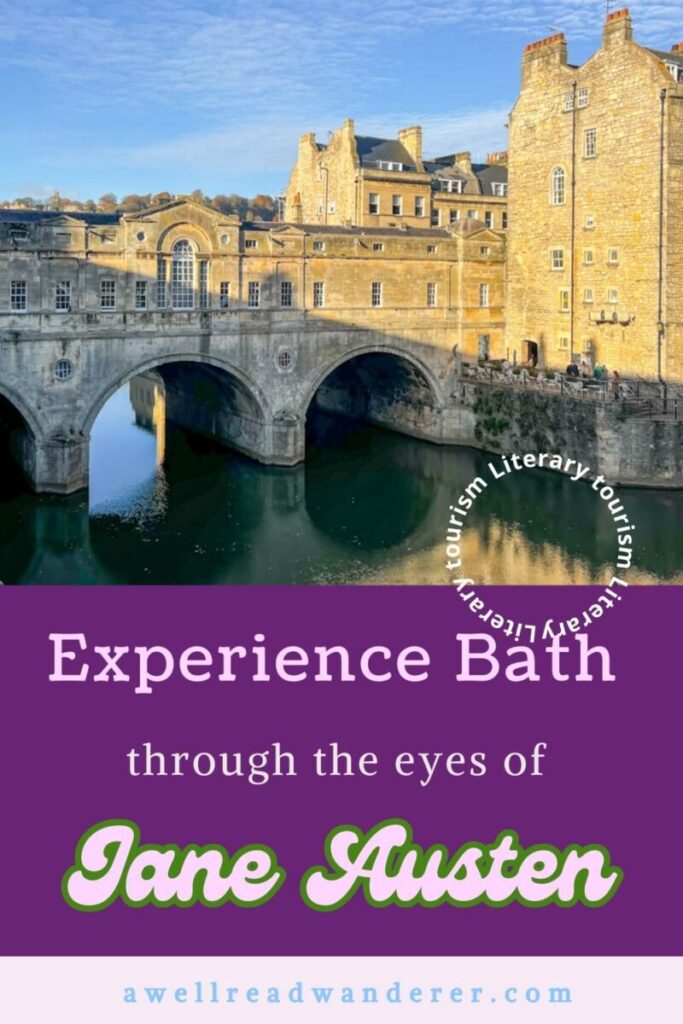
Pulteney Bridge is another iconic Bath location that pre-dates Austen’s time in the city. It was built in 1770 and modeled after the Ponte Vecchio in Florence, Italy. It replaced the ferry that used to be the primary crossing of the Avon River but also serves a more mercenary purpose – like the Ponte Vecchio, it’s lined with shops on both sides of the bridge.
When Austen lived in Sydney Place, she would’ve crossed this bridge on a daily basis to visit the shops in Milsom Street or attend society events in the Pump Room or Assembly Rooms. Apart from the cars that now cross instead of horses and carriages, the bridge remains largely unchanged since Austen’s day.
Austen fans should take their time strolling Pulteney Bridge and browsing shop fronts. Just picture yourself searching for the perfect ribbon with which to trim your bonnet for an upcoming ball.
Location: Bridge Street, Bath
Great Pulteney Street
Just on the other side of Pulteney Bridge is Great Pulteney Street, a wide thoroughfare lined with Georgian row homes. In Northanger Abbey, the Allens and Catherine Morland stay on this street during their time in Bath.
Austen would’ve been very familiar with this street, walking it daily on her way into town from her residence in Sydney Place.
Location: Great Pulteney Street, Bath
Sydney Place & Sydney Gardens:
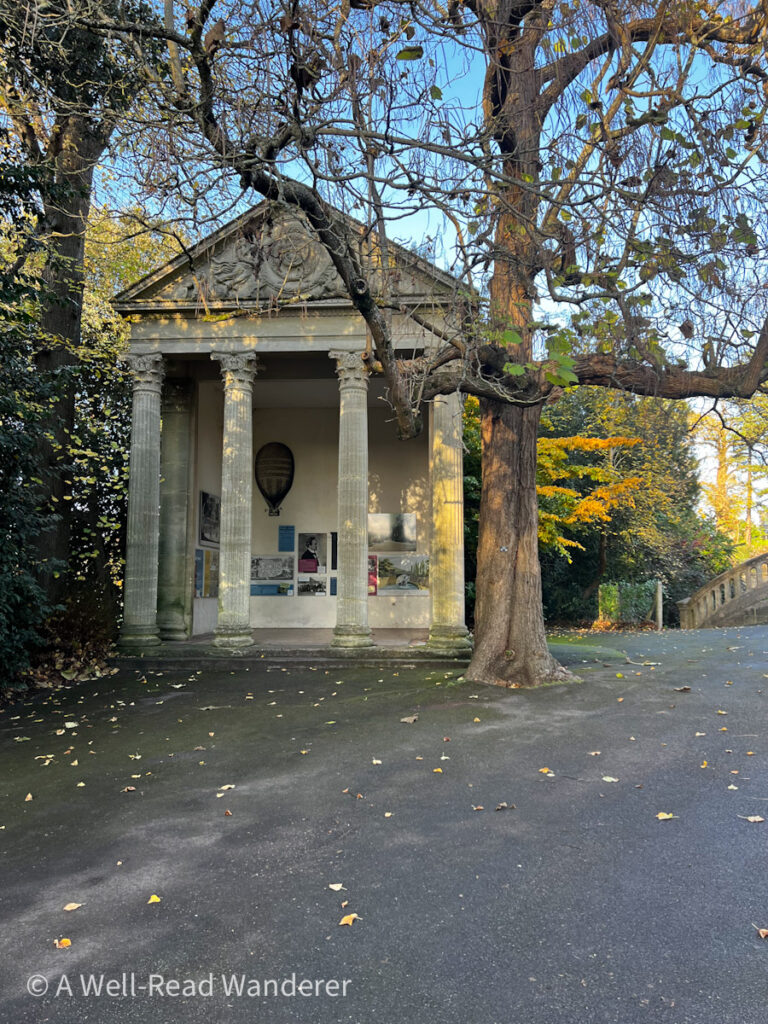
Located at the end of Great Pulteney Street, it’s worth clocking the extra distance outside of central Bath to check out Austen’s favorite residence in the city. The Austen family lived at 4 Sydney Place from October 1801 – Summer of 1804, as it was quieter and more affordable than a more central location.
Jane loved the location right next to the Sydney Gardens, a large green space with lots of walking paths and even a labyrinth. She wrote to her sister, Cassandra, in anticipation of the move:
“It would be very pleasant to be near Sydney Gardens; we might go into the labyrinth every day.”
Jane Austen to Cassandra, Wednesday January 21, 1801
The Sydney Gardens was also an important location for society events in Austen’s Bath. She attended outdoor concerts there and enjoyed seeing fireworks.
You can wander around the beautiful Sydney Gardens on your own, imagining Jane walking here and pondering on her latest novel. Feel free to consult this free Austen-themed map of Sydney Gardens or follow the Jane Austen Trail around the gardens.
Tip: The building in which Austen lived at 4 Sydney Place is now a vacation rental! It’s heavily modernized inside, but it’s still a pretty cool experience to stay in Jane Austen’s home.
Location: Sydney Gardens, Bath
Holburne Museum
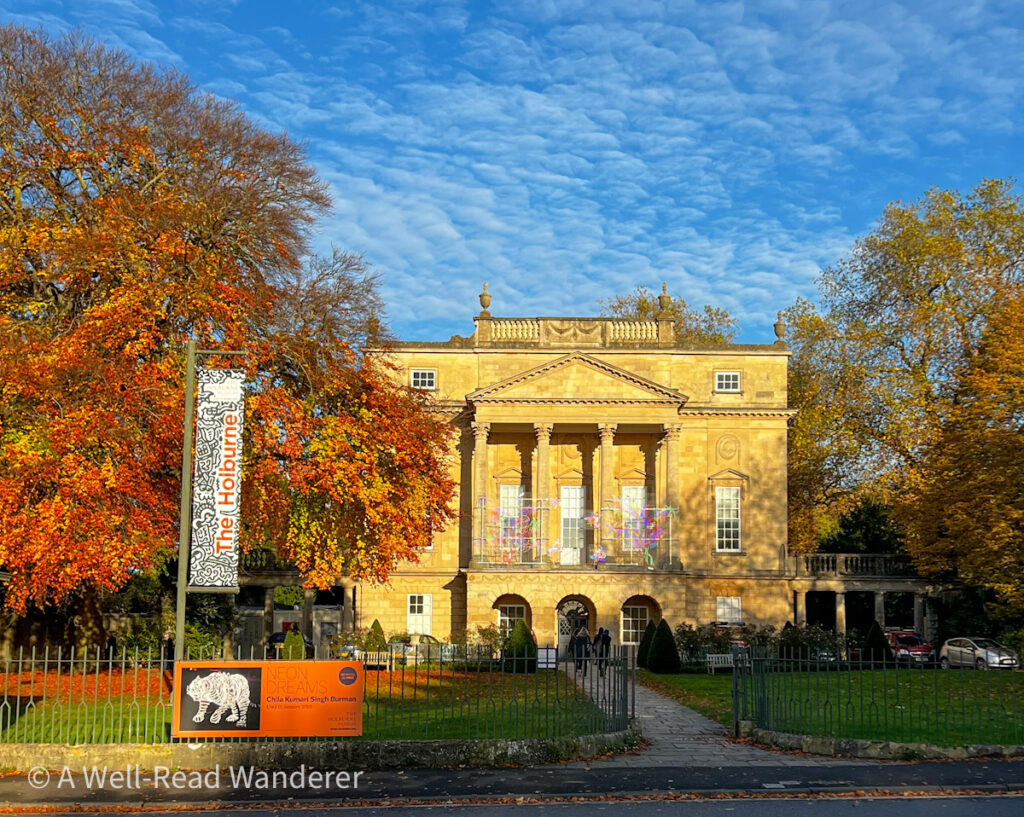
At the end of Great Pulteney Street, you can’t miss the grand facade of the Holburne Museum. In Jane Austen’s day, this was the Sydney Hotel, a place she frequented for breakfast. They also hosted balls, concerts, and other social events there she likely attended.
Today, it’s the Holburne Museum, the city’s first public art gallery. For the 250th Anniversary Jane Austen celebrations happening in 2025, there is a special exhibit titled “Illustrating Jane Austen” that you can see if you decide to go inside. It focuses on the artwork featured in various editions of Austen’s novels.
I opted to allocate my time wandering the gardens instead of going inside the museum, but if you’re an art lover, you may want to leave time to check it out.
Location: Great Pulteney St, Bath
Tip: Bridgerton fans might recognize the exterior of the Holburne Museum as the entrance to Lady Danbury’s house
Milsom Street

In Austen’s time as it is today, Milsom Street is the shopping center of Bath. Austen would’ve shopped here on a regular basis, and she mentions it by name in both of her Bath novels.
In Northanger Abbey, the honorable General Tilney and his children stay on Milsom Street, a more fashionable address than Pulteney Street. In Persuasion, a sweets shop on Milsom Street is the location in which Anne Eliot and Captain Wentworth first encounter each other after years of absence.
Location: Milsom Street, Bath
St. Swithin’s Church
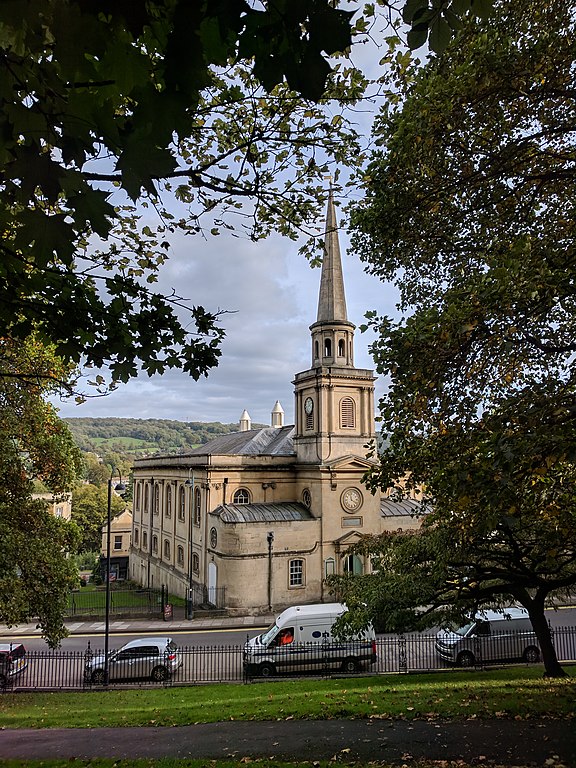
If you’re a die hard Austen fan with lots of time in Bath, you might consider a walk up to St. Swithin’s Church. Often overlooked in favor of the more dramatic Bath Abbey, St. Swithin’s has some direct connections to the Austen family.
It was in this church where Jane’s parents were married in 1767, and her father was buried in the churchyard in 1805.
Location: The Paragon, Bath, BA1 5LY
Related: Bath Abbey has a literary connection, too — it was right near here that Mary Shelley lived when writing Frankenstein. I highly recommend checking out the Mary Shelley’s House of Frankenstein on Gay Street during your time in Bath.
Jane Austen Tours & Activities in Bath
In addition to walking around seeing the many Jane Austen sites in Bath, you might choose to take part in a number of Austen-themed activities around town. Here are some ideas to get you started.
Jane Austen Walking Tours
If you want to visit many of the aforementioned sights around Bath but learn more about them as you go, then I’d consider taking one of the many Jane Austen audio tours of Bath. You have several options from which to choose:
- The free Jane Austen audio tour from Visit Bath – I think it’s really well done, but I did have some connectivity issues that resulted in some frustration with SoundCloud
- Free tour of the Jane Austen Trail through Sydney Gardens – I didn’t have time for this, but you might enjoy it if you have more time to spend in the gardens
- Paid audio tours on Viator/GetYourGuide – I haven’t tried any of these myself so can’t personally vouche for them. I recommend reading the reviews of each before purchasing.
Or, of course, you can pay to go on a guided Jane Austen tour of Bath with a live tour guide.
Regency Afternoon Tea
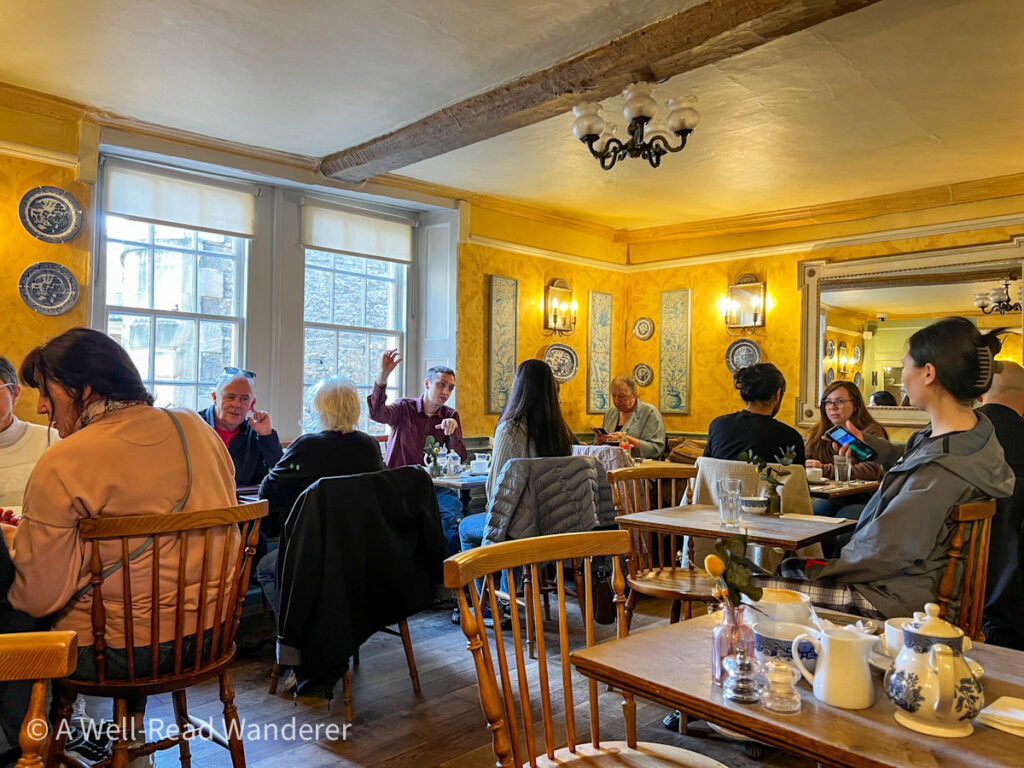
One of the most popular ways to take yourself back to Jane Austen times is to enjoy an afternoon tea in Bath. Fortunately, you are spoiled for choice here. Let’s break down some of the most popular Bath afternoon tea options:
- Afternoon Tea at the Pump Room — starting from £42.50, enjoy afternoon tea with live music in a room where Austen herself likely enjoyed afternoon tea. Book well in advance.
- The Regency Tea Room at the Jane Austen Centre — starting at £26.50 for a full afternoon tea (with cheaper, less elaborate options available), enjoy the fantastic views of Bath in the much more modest but still elegant Regency Tea Room atop the museum. Book in advance.
- Sally Lunn’s High Tea– starting at £18 for a 2-course high tea (with cheaper cream teas also available), you can have afternoon tea in the charming and quirky Sally Lunn’s eatery. This is a unique atmosphere that’s much more casual than the previous two options, and it includes a Bath bun.
Take the Waters
It’s just short of a crime to visit Bath and not participate in a tradition not only popular during Austen’s time but long before it and take the “healing waters” for yourself. You can try drinking the water at the Pump Rooms or the Roman Baths, but you can also submerge yourself in them at a couple of places.
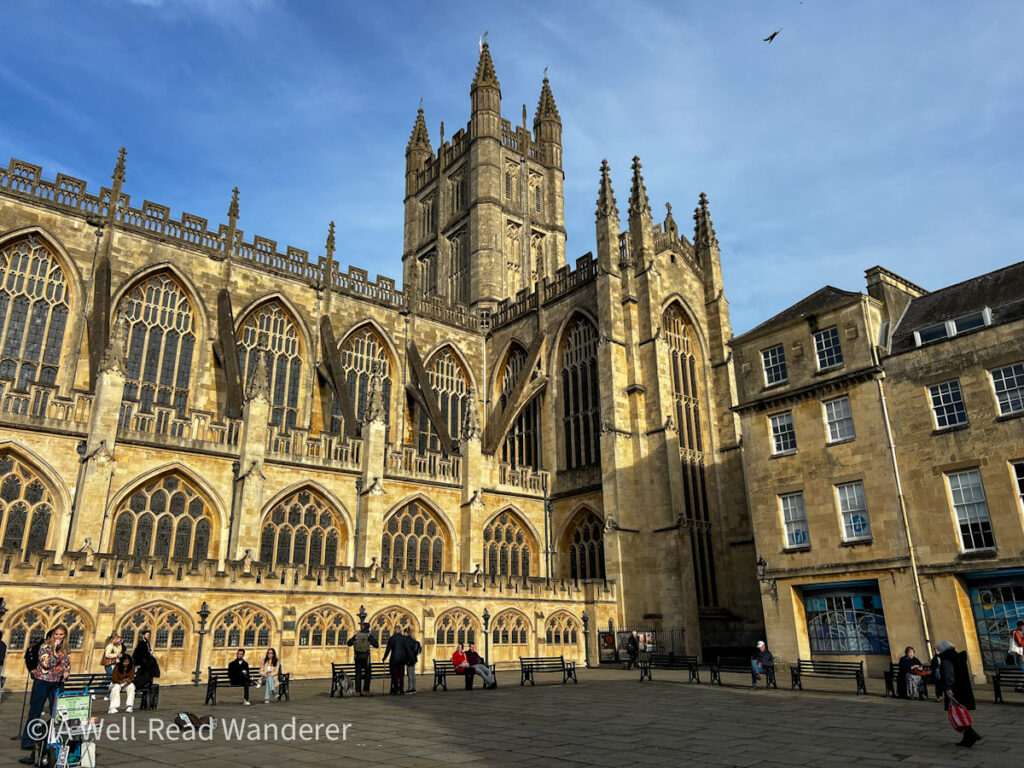
The most popular option is the Thermae Bath Spa with its iconic rooftop pool and views of the gothic spires of Bath Abbey. You can soak yourself in the natural mineral water as Austen’s brother did and, if you choose, book a spa treatment to go along with it.
Another spot to enjoy the mineral waters is at the Gainsborough Spa Hotel. If you book a spa treatment, it includes access to their mineral pools, saunas, and steam rooms. If you stay there as I did, you get free access to the area in the morning and evening.
I opted for the Gainsborough spa since I was staying there, and I’m glad I did. I had the spa area almost entirely to myself, whereas I could see the very crowded Thermae Spa from my hotel room window. If you opt for the Thermae Spa, perhaps consider visiting during the week in the morning hours.
Either one you choose, you’ll likely thoroughly enjoy the experience.
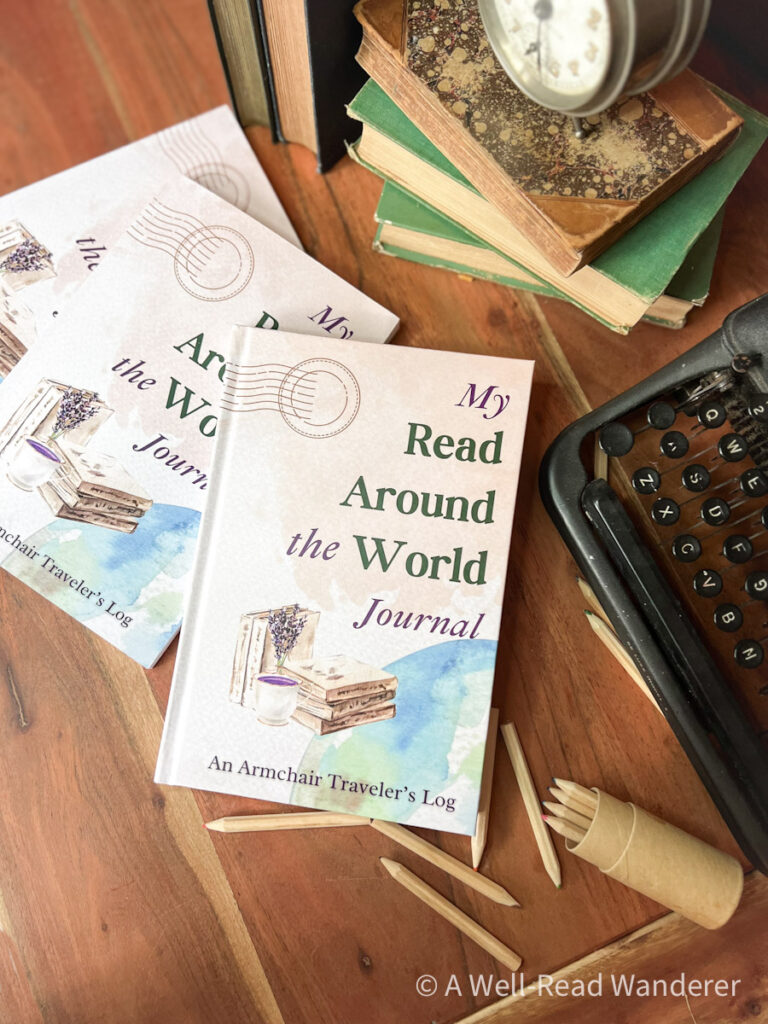
Do you enjoy reading books set in different countries? I’ve designed a custom Read Around the World Journal specifically for readers who want to explore more world literature and track their progress. Make lists, color in bookshelves, and play Read Around the World Bingo in this unique reading tracker.
You can take a peek inside the journal, peruse my list of resources to help you on your reading journey, and order a copy if you think it’s the right fit for you!
Bath Jane Austen Festival
Each September, Bath puts on an epic Jane Austen Festival that takes over the city for a full 10 days. People travel from all over the world to promenade around the city in Regency costumes, dance the night away at Austen-themed balls, listen to lectures on leading Austen scholars, learn how to trim their bonnets, and more Austen-themed fun.
If you want to go, I recommend signing up for the festival newsletter and closely watching for when tickets are released. I tried to get tickets for a ball in 2024, and tickets were sold out in less than 10 minutes. I also recommend finding and booking your lodging well in advance, or you might find it hard to find any!
Related: Do you enjoy attending author-inspired literary festivals? Check out the incredible Harry Potter festival in Virginia and the world’s largest Dickens Festival in the Netherlands.
Where to Stay in Bath
Bath is a very pedestrian-friendly town, so I recommend trying to stay close to the city center if you can. I loved my stay at the Gainsborough Spa Hotel, but you’ve got lots of options (you can even stay in one of Austen’s former residences!).
As you look for somewhere to stay, I recommend checking for lodging on Hotels.com. I almost always book my accommodations through Hotels.com, because you can earn rewards for every night you stay without having to choose only one hotel chain to be loyal to. You can even book locally owned apart hotels and bed and breakfasts.
If you’re looking for privately owned vacation rentals, I recommend checking VRBO. I’ve personally had much better experiences with their owners and rentals than I have with their primary competitor.
Travel Resources At-A-Glance
All of the following are links to sites and services I actually use to book and plan my travel or to purchase books or travel gear.
For flights: Skyscanner is my number one go-to resource for booking flights. I love using the “explore” function to find the cheapest places I can fly during a given time or using the fare calendar to identify the cheapest days to fly.
For hotels and lodgings: For hotels, hotels.com, and for vacation rentals, VRBO.com. I’ve had much better experiences with private rentals through this website than through other popular private vacation rental websites.
For car rentals: Kayak allows comparisons across a wide range of booking agencies and lists reviews of companies as well. I’ve found this to be the most user-friendly and efficient way to compare car rental prices.
For tours & excursions: Viator and Get Your Guide are my top choices for booking excursions and tour experiences in a new destination.
For travel gear: Amazon.com and REI for more outdoorsy items. Check out my travel gear recs here.
For booking trains & buses: I find the Omio app and website to be the most easily navigable for comparing options for public transportation, especially in Europe,
Best travel credit card: My favorite travel rewards credit card for European travel has been the Chase Sapphire Rewards card. Visa is accepted just about everywhere in Europe, and there are no foreign transaction fees on the card. Some of the travel benefits I love on the Chase Sapphire include free TSA pre-check or Global Entry (worth it every time), an annual $200 travel credit, an annual $200 hotel benefit, built-in rental car, and trip insurance, and points are worth 50% more when used to book travel. I travel around Europe a LOT, and I end up with many free flights and hotel stays from using my points on my Chase Sapphire.
For books: Bookshop.org often has prices as good as Amazon or sometimes better, but profits go to indie bookstores all over the country. Whenever possible, consider buying your books from this online indie bookshop resource.
What other places are on your literary travel bucket list? Make sure to sign up for my newsletter so you can find out about more great destinations for book lovers as well as some of my exclusive book recommendations.
Don’t forget to pin this post for later.