


Think You Know Dickens? 15 Shocking Charles Dickens Facts
Think you know Dickens? I’m prepared to bet you don’t know at LEAST 7 of these facts about Charles Dickens, one of the most successful Victorian writers to come out of England.
Charles Dickens is famous as the author of such works as A Christmas Carol, Oliver Twist, Great Expectations, A Tale of Two Cities, The Old Curiosity Shop, and more. He’s plenty well-known now, yes, but during his lifetime, he achieved global celebrity status.
He seemed to be everywhere at once, working in a frenzy, and going in a million different directions. In total, he wrote 15 novels (most of them astonishingly long), but also edited periodicals, gave hundreds of public performances, and involved himself in charity work.
These days, it’s relatively common knowledge that Dickens grew up poor and began working in a factory at the age of 12. Most of us already know the incredible story of how he wrote and published A Christmas Carol in a gamble that paid off immensely.
But I’ve done a deep dive into the life of the author and uncovered 15 Charles Dickens facts that are sure to surprise you. So, think you know Dickens? Read on, and you certainly shall. I’m a lifelong bibliophile and a literary travel expert, but even I was surprised to learn some of these interesting facts about Charles Dickens.
Don’t forget to pin this post so you can come back to it and impress your friends with your literary knowledge!

As always, this post may contain affiliate links, which means at no additional cost to you, shopping from them may generate small commissions to support the operations of this blog.
Whenever possible, I recommend buying books at local bookshops or through Bookshop.org, because shopping there puts the profits right into the hands of indie bookstores all over the country.
Don’t feel like reading? Catch the highlights of these fun facts by video:
Charles Dickens nearly became an actor
All the evidence of Charles Dickens’s life seems to reveal one constant: he loved — and longed for — fame. He was drawn to the art of performance as a teenager, and before he ever picked up a pen to try his hand at fiction, he dreamed of a career on the stage as an actor.
Dickens even had a scheduled audition time for the Covent Garden Theatre in 1832, but he missed his audition due to illness. Ultimately, he didn’t pursue a life on the stage, and the reason? Love.
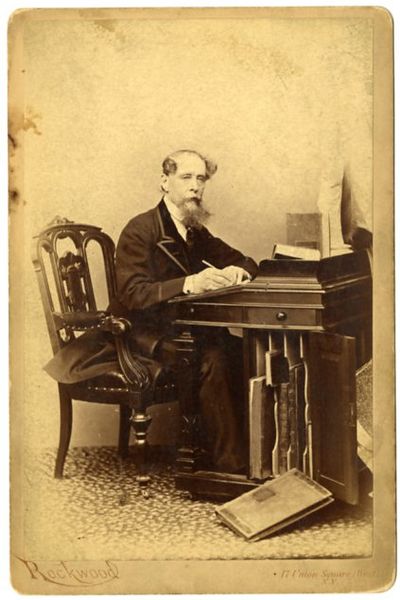
At the age of 18, Dickens fell wildly in love with Maria Beadnell, who was two years his senior. The love lasted three years an included some rather cringe-worthy poetry from Dickens. Apparently, Maria’s husband was less than thrilled at the idea of his daughter spending time with an aspiring actor, so he gave up the dream.
And no, Maria Beadnell still didn’t marry him.
Tip: To learn more, check out Charles Dickens and Maria Beadnell
He published the works of other now-famous authors, like Elizabeth Gaskell and Wilkie Collins
Dickens was not just a writer, as you’ll come to see as you read through these interesting facts about Charles Dickens. One of the many projects he worked on was his own serial publication, called Household Words. This was a weekly literary magazine, in which many authors published under pseudonyms.
Dickens sought out other writers whom he admired to contribute to his serial, which included contemporaries Elizabeth Gaskell and Wilkie Collins.
You can view an online archive of editions of Household Words for free (isn’t the internet amazing?)
Related: Did you know that the world’s largest Dickens Festival is actually held in the Netherlands? Each December this small Dutch town transforms into Victorian England in a truly impressive homage to the writer.
Dickens founded a home for “fallen women”
Charles Dickens is well-known for his charity work. He concerned himself greatly with working conditions, poverty, and the plight of the common man, themes that featured prominently in his novels.
In 1847, Dickens partnered with benefactor Angela Burdett-Coutts to establish Urania Cottage, a refuge for fallen women — this likely included former sex workers, but also women whose reputations had been compromised for one reason or another.
At Urania Cottage, women found not only privacy and safety but another chance at life. Dickens reportedly insisted that they not be lectured by any religious leaders or encouraged to repent; rather, women at Urania Cottage spent their time learning new skills. Eventually, the charity would help them restart their lives overseas.
This really is an interesting fact about Charles Dickens, because as much as Dickens loved his own celebrity, he quite notably didn’t make his involvement in this charity known to the public.
Tip: To find out more, check out Charles Dickens and the House of Fallen Women by Jenny Hartley

Related: If you’re a Dickens fan and looking for an audiobook version of A Christmas Carol, check out my review of one rendition that’s free for Audible Plus users. Plus, check out my list of recommended Christmas books to expand your seasonal reading.
Charles Dickens (might have) based his villains on… himself
If you haven’t gathered it yet, Dickens was a complicated man, neither hero nor villain. He was charitable and enthusiastic, but sometimes cruel and quick to cut people out of his life. He wrote some of literature’s most memorable villains, and the story goes, these villains are based on himself.
There’s a story that appears in multiple Dickens biographies about a meeting of Russian author Dostoevsky and Dickens. According to the story, the pair discussed their writing processes, and Dostoevsky later recorded some of their discussion in a letter, including the following:
“He told me that all the good simple people in his novels …are what he wanted to have been, and his villains were what he was (or rather, what he found in himself), his cruelty, his attacks of causeless enmity towards those who were helpless and looked to him for comfort, his shrinking from those whom he ought to love, being used up in what he wrote.
There were two people in him, he told me : one who feels as he ought to feel and one who feels the opposite. From the one who feels the opposite I make my evil characters, from the one who feels as a man ought to feel I try to live my life.”
Some people have called into question the authenticity of this letter and of the encounter itself, it’s important to note. But while it may be a fabrication, the central message may still be true. Indeed, though he was charitable, Dickens wasn’t always the nicest guy.
In my facts about Elizabeth Gaskell, for example, I wrote about how Dickens told his friend that if he was Gaskell’s husband, “oh heaven how I would beat her.” Charming, no?
He publicly defamed his wife and divorced her to pursue a teenage actress
This interesting fact about Charles Dickens follows quite naturally from the last… in perhaps Dickens’s darkest period, he fell in love with an 18-year-old actress (he was 45), not unlike John Steinbeck remarrying a twenty-something night club singer. In order to pursue a life with Ellen Ternan, he divorced his wife and the mother of their 10 children in very public fashion.
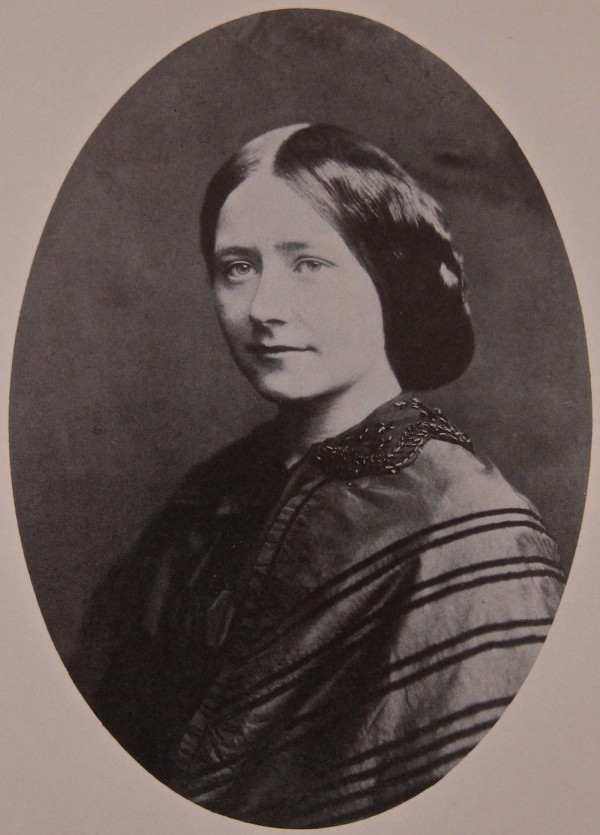
Dickens raged against Catherine Hogarth publicly and in the press and turned all but one of their children against her. If friends spoke up in her defense, he cut them out of his life. Notably, Catherine never responded to his ongoing defamation of her character and is generally believed to have maintained a dignified silence in response.
Tip: to find out more, read The Invisible Woman: The Story of Nelly Ternan and Charles Dickens by Claire Tomalin
Dickens was a ghost hunter (of sorts)
Dickens was fascinated by the paranormal to the point that he literally joined a club of ghost hunters. It’s called The Ghost Club, based in London, and it’s still active today. The organization’s mission as stated on their current website is to “offer open-minded, curious individuals the opportunity to debate, explore, and investigate unexplained phenomena.”
Dickens practiced hypnosis
Here’s another surprising Charles Dickens fact: he fancied himself a hypnotist. Actually, the technique was known as mesmerism at the time, and was believed to be a way of influencing the magnetic forces inside of people to cure them of various ailments.
Dickens trained under one of the most well-known practitioners of mesmerism, John Elliotson, and practiced it on anyone who was willing (interestingly, he was never willing himself to be the subject). Dickens used mesmerism as treatment for his wife’s headaches and also practiced on his sister-in-law and one of his illustrators.
He practiced this kind of hypnotism repeatedly on a friend Augusta de la Rue, to help cure her of “spectres,” and he even bragged in a letter once,
“I have the perfect conviction that I could magnetize a Frying-Pan.”
Charles dickens
Dickens rolled around in mud outside Windsor Castle on Queen Victoria’s wedding night
I can’t believe I wrote that statement. The story seems too bizarre to be true, but it’s one that was uncovered by a noted Dickens biographer, Claire Tomalin. Apparently, Dickens (a married man and father) suddenly decided he was passionately in love with Queen Victoria, despite the fact that they had never actually met (Tiny, insignificant detail).
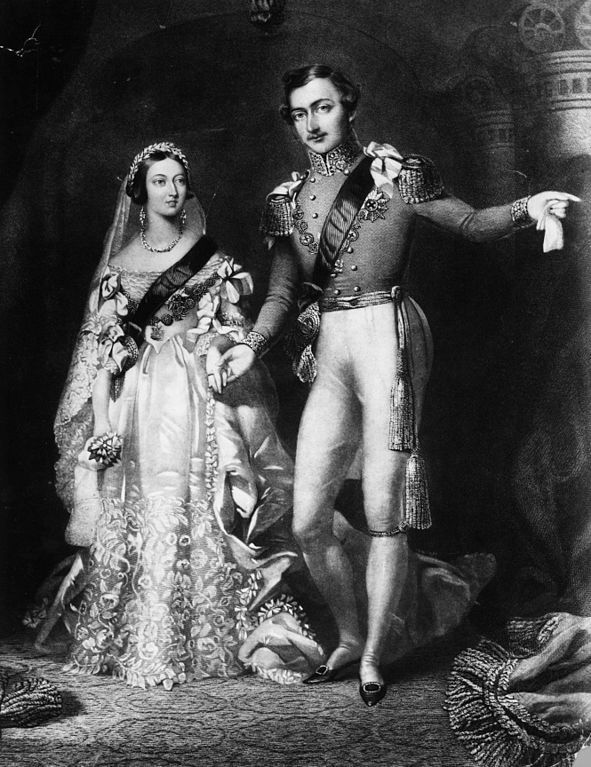
On the Queen’s wedding night to Prince Albert, he brought his friend with him to Windsor Castle to find the window of the room where Victoria and Albert would have been… royally consummating their marriage. Overcome with agony at the thought, Dickens threw himself down into the mud and began rolling around in it, unconcerned with staring passersby.
He later even wrote to his friend that he was considering starving himself to death for love of the Queen. Yet on repeated occasions for the next 30 years, Dickens flat out refused every request she extended to meet him. He finally relented and met her in 1870, very shortly before his death.
I always knew Dickens was a passionate man, but my goodness…
Related: If you’re a Dickens fan, you don’t want to miss the Charles Dickens Museum in London. It’s one of my favorite literary travel sights!
He invented several words and phrases, like butterfingers and “the creeps”
Like Shakespeare, Dickens is credited with creating or popularizing many words and phrases we still use in the English language. He created the word “butterfingers” to describe the clumsiness of a cricket player in The Pickwick Papers.
He used the expression “The creeps” in David Copperfield:
“She was constantly complaining of the cold, and of its occasioning a visitation in her back which she called ‘the creeps’.”
And these are only two of many examples. He also invented other words and expressions, like “flummox” and “devil-may-care.”
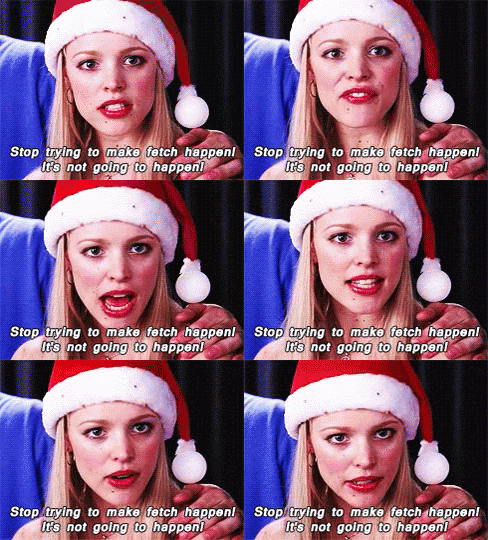
Gretchen Wieners could have taken a page from Dickens’s book; if only she’d just become a world-famous author, maybe she could’ve made Fetch happen after all.
Dickens had a brief stint as an incognito stage magician
Dickens seems to have simply loved the art of performance. He’s known for his popular, dramatic readings of his novels, and we’ve already established that he considered a career in acting.
But did you know this Charles Dickens interesting fact? Between 1842 and 1849, he performed stage magic under the pseudonym The Unparalleled Necromancer. For the final climax of his show, Dickens would produce a (reportedly stinky) plum pudding from his hat.
Amateur conjuring was a fleeting passion. In total, 10 amateur magic shows from The Unparalleled Necromancer have been documented.
Tip: To learn more, read Charles Dickens Magician: Conjuring in Life, Letters and Literature by Ian Keable
He nearly died in a train accident
Dickens and his mistress, Ellen Ternan, were passengers during the infamous Staplehurst rail crash on June 9, 1865. Their train hit a broken rail line when passing over a viaduct, derailing so severely that six first class carriages uncoupled and plummeted off the bridge.
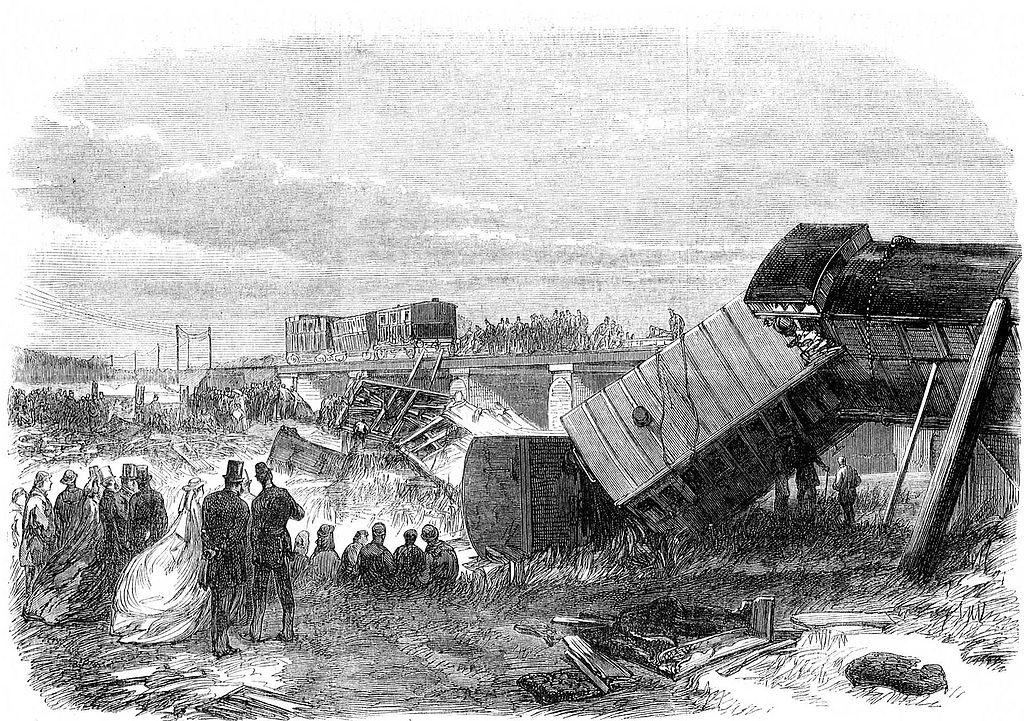
The final first class carriage, the one which held Dickens and Ternan, was left dangling off the edge of the bridge, precariously coupled to the second class carriage behind it.
10 passengers died in the accident, with many more seriously injured. Dickens reportedly helped administer to injured passengers and even climbed back into the dangling train car to retrieve his latest manuscript, Our Mutual Friend.
Charles Dickens was buried in Westminster Abbey against his wishes
How old was Charles Dickens when he died? It’s easy to imagine he lived a long life, given the sheer volume of works he produced during his lifetime, but he actually died quite young, at the age of 58. Some people attribute his failing health as an effect of his divorce and the turbulent times that followed.
You might expect that for a man who loved performances and audiences, and who was an international celebrity, he would have had a public and perhaps even ostentatious funeral. To the contrary.
In his will, Dickens gave very specific instructions about his burial, right down to what people should wear (no scarf, cloak, black bow, or long hatband) and how many coaches could be used (no more than three). He designated that he should be buried in an “inexpensive, unostentatious, and strictly private manner,” but what he didn’t specify? Where he wanted to be buried.
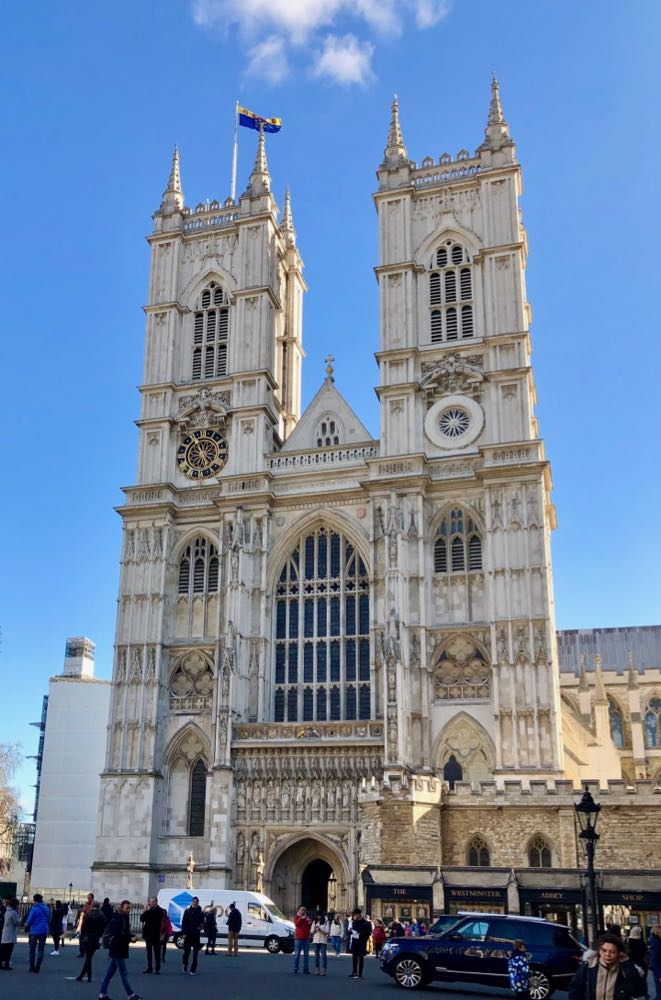
So, naturally, what less ostentatious or public place to put him to rest than inside Westminster Abbey, the most famous church in England, the burial place of the Kings and Queens of England and the site of royal coronations?
You can still visit Dickens’s final resting place there in the Poet’s Corner of Westminster Abbey (one of my favorite places in all of London!).
Dickens expressly stated that there should never be any statues of him
Alongside his very specific instructions that he have a private, unostentatious funeral, Dickens also wanted to make it perfectly clear that he should NOT be memorialized in any way after his death.
“I conjure my friends on no account to make me the subject of any monument, memorial, or testimonial whatever. “
charles dickens
It’s safe to say, these wishes haven’t exactly been carried out to the letter. Dickens’s own great-great grandsons attended the unveiling of a statue of Charles Dickens near his birthplace. One might also argue that turning one of his London houses into a museum is a sort of memorial (but a really fun one!).
Related: If you’re a tea-drinking bibliophile, check out my recommendations for bookish tea companies. There are several that make teas inspired by Charles Dickens!
Dickens Supposedly haunts a hotel in Boston
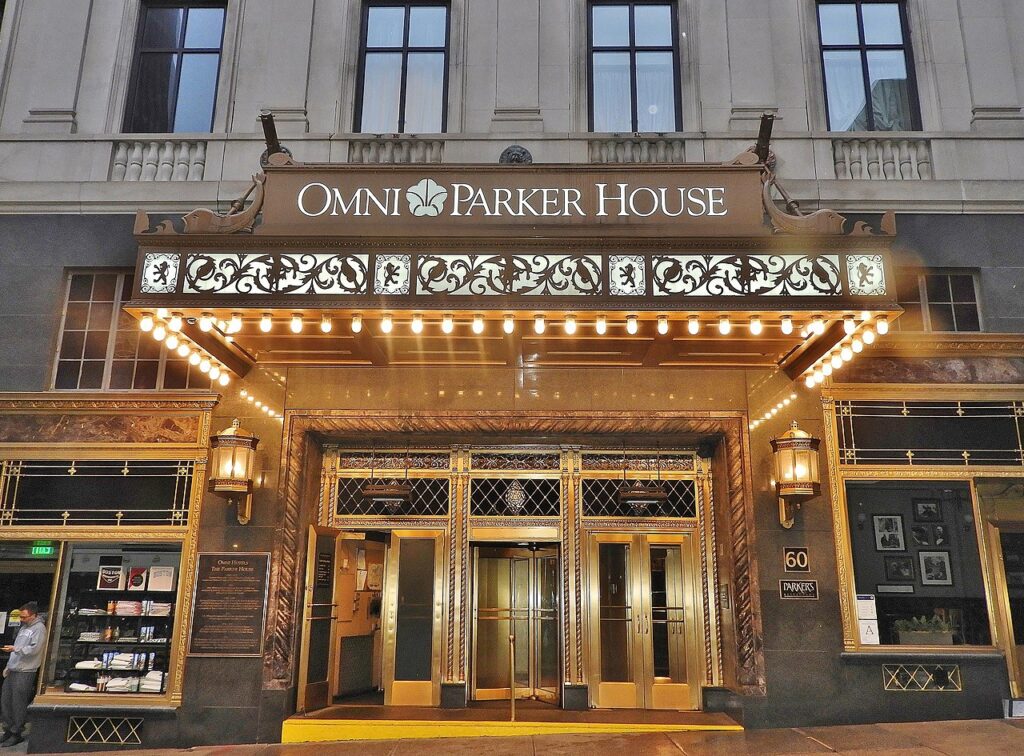
When touring the US giving readings of his latest novels, Dickens often based himself at the Omni Parker Hotel in Boston, Massachusetts. And word is, he never left. Perhaps it’s appropriate for a former ghost hunter, but people have reported sightings of Charles Dickens’s ghost at the Omni Parker hotel.
It is a fascinating phenomenon, one you can read more about in my post about the literary and haunted history of the Omni Parker Hotel.
Dickens still has descendants who perform his works
Because Dickens and Catherine Hogarth had so many children, it makes sense that there are still Dickens descendants alive today! And several of them have embraced their literary heritage.
The Dickens Museum in London frequently hosts members of the surviving Dickens family to give readings of his books or to host “Christmas with the Dickens.” They also sometimes give talks and webinars about their ancestor.
How many of these 15 Charles Dickens facts surprised you? What other authors would you like to learn more about? Drop them in the comments!
And don’t forget to pin this post for later and follow my literary travels on Instagram.





Did you know there’s an entire Dickens Festival in the Netherlands? I’m going there tomorrow! Can’t wait!
Thank you so much for telling me about this! I decided to make a spontaneous trip there too because of your comment!