

Hidden Gems of Oahu: A Hawaii Cacao Farm Tour
I’m going to let you in on a travel secret, one of the best hidden gems of Oahu: visiting an operational Oahu chocolate farm, 21 Degrees Estate.
I did promise to mix up our literary travel talk with bits of chocolate and tea, so here we go. For those in the US, today is National Chocolate Day, and although every day feels like National Chocolate Day in my house, I still think it’s something worth celebrating.
In addition to literary tourism, I’m also a fan of chocolate tourism. I love to scope out chocolate factories, tours, shops, and experiences anywhere I go. Until recently, I’d seen just about every step in the chocolate-making process except the growing and processing of the cacao itself.
So, I remedied this a couple of weeks ago with a beautiful and informative two-hour tour of a local Hawaii cacao farm, 21 Degrees Estate, located on the windward side of Oahu in Kaneohe. And while I fancied I knew a lot about chocolate before I came, I still managed to learn a ton.
This Oahu chocolate farm tour in Kaneohe is one of my top recommendations for hidden gems of O’ahu that are off the beaten tourist track. As someone who lived in Hawaii, I can tell you that this is a really unique and worthwhile experience to prioritize for your Oahu itinerary.
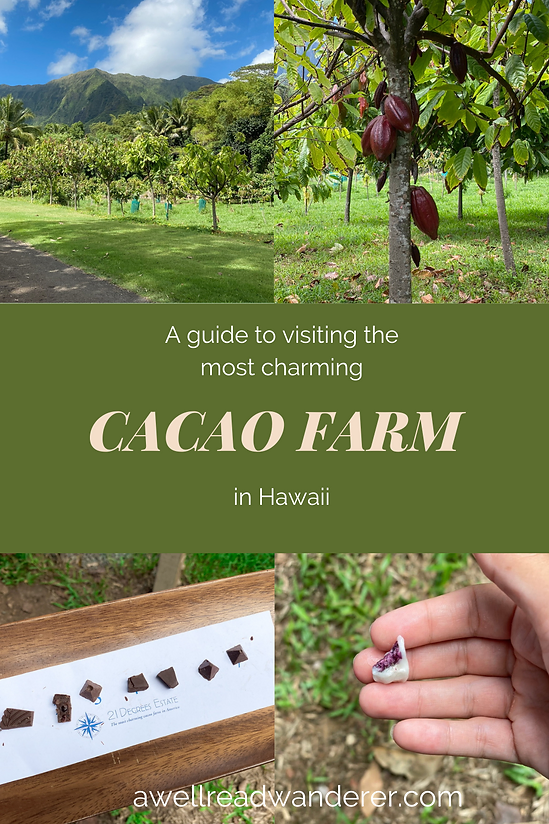
Make sure you pin this post to reference in planning your next trip to Oahu.
As always, this post may contain affiliate links, which means at no additional cost to you, shopping from them may generate small commissions to support the operations of this blog.
Whenever possible, I recommend buying books at local bookshops or through Bookshop.org, because shopping there puts the profits right into the hands of indie bookstores all over the country.
About 21 Degrees Estate: Oahu chocolate farm
First of all, why the name 21 Degrees? Cacao is best grown in the regions 20 degrees north and south of the equator. It’s abundantly grown in Western Africa, which produces about 70% of the world’s chocolate. Ecuador, Indonesia, and Brazil also grow substantial amounts, primarily sold to big chocolate companies like Mars, Nestle, and Ferrero (if you want to learn more about the worker conditions and human rights issues in the “big chocolate” supply chain, check out this excellent article from the LA Times).
The islands of Hawai’i lie approximately at the 21-degree north latitude, technically just outside the 20-degree mark, but farmers here still manage to grow cacao, and delicious cacao at that. Its location makes it the only state in the US that can do so. Still, land in Hawaii isn’t cheap, so cacao growers here typically operate small farms that contribute a relatively minuscule amount of cacao globally.

But what Hawaii cacao growers lack in quantity, they certainly make up for in quality, specializing in high-quality bars that are locally manufactured.
If you’ve never tried a single-origin chocolate bar (most chocolate bars are made from mixing cacao sourced from all over to maintain a relatively consistent flavor), you might not realize how different chocolate tastes depending not only on what state or country it’s grown in, not only the specific farm it’s grown on but even on the time of year and climate conditions of the specific farm it’s grown on. That was something I truly came to appreciate on this tour.
You’ll find more chocolate farms on the Big Island of Hawaii than on O’ahu, mostly because it’s a larger island with more available real estate for farming. In fact, 21 Degrees Estate is the only Oahu chocolate farm that offers tours currently, earning its place among the hidden gems of Oahu.
Taking the Only Oahu Chocolate Farm Tour
The 21 Degrees Estate tour first took us on a guided walkthrough of the cacao grove. I’d never realized the variety of cacao trees and how many different colors the pods can be, from yellow to green to red to deep purple.
The tour guides explained how the pods need to be picked at exactly the right time, and if you pick too early or too late, you’re out of luck. Split open, you can see that the inside is filled with the seeds (which will become chocolate) surrounded by a white, sticky pulp. Eaten raw, the outer pulp is quite sweet, while the hard, purple bean is very bitter and earthy-tasting (plenty of people on the tour decided to spit this out after giving it a taste).
The cacao beans have to undergo a process of fermentation and drying before they start to take on that delicious chocolate taste. After weeks of fermentation and drying, the cacao is ready to go to a chocolate maker, who roasts and processes the beans into what you’d recognize at the store: chocolate bars, chocolate chips, and the like.

Our tour of the 21 Degrees Estate concluded with what we’d all been waiting for… the chocolate tasting! Guided by one of the farm owners, who’s also a Chocolate Sommelier (yes, that’s a thing!) we tasted seven different chocolate bars all made from the cacao grown on their farm. The difference in textures, mouth feel, and flavor between different seasons of cacao harvests was remarkable (and delicious)!
Of course, I couldn’t leave this Oahu chocolate farm tour without raiding the gift shop to buy some of my favorite bars in larger quantities.

Tips for visiting the Oahu chocolate farm
First of all, check out my list of surprising things to know before visiting Hawaii and read up on these books set in Hawaii so you’re prepared for your trip.
Once you’ve read that over, you’re ready to visit this hidden gem on Oahu.
2-hour tours, including a chocolate tasting, are available every Tuesday at 2 p.m. and Saturday at 10:30 a.m. Tours fill up fast, so try to book at least two weeks in advance.
Tours and tastings cost $45 per adult, $20 for 13-18 year-olds, $10 for ages 6-12, and free for 5 and under (military and kama’aina discounts available).
I recommend bringing sunscreen and/or a hat, bug spray, and water (if the heat doesn’t get you thirsty, the chocolate will!). The gift shop accepts cash or credit cards.
The tour is kid-friendly. Kids are able to pet and feed the farm’s goats, visit the chickens and bees, and wander around the farm a bit (though they are not supposed to touch the cacao trees!).
In addition to tours, the Estate hosts special events throughout the year, including goat yoga and farm-to-table dinners. If you’re local, you can also sign up to volunteer on cacao harvest days.
Just want to buy Hawaii-grown chocolate?
The sad truth of the chocolate industry is that it’s rife with human rights issues, including child labor and the impoverishment of farmers. If you can’t make it to Hawaii in the near future but just want to taste some delicious chocolate grown and manufactured ethically from bean to bar, you can shop at Manoa Chocolate Factory‘s online store. They partner with Hawaii growers (and some growers in other countries) to produce delicious, ethical chocolate.
They even just released a “Flavors of Hawaii” package: Check it out here. Why not order a bundle and have your own chocolate tasting with friends or family? (But if you decide to keep the bundle to yourself, I certainly won’t tell).
Travel Resources At-A-Glance
All of the following are links to sites and services I actually use to book and plan my travel or to purchase books or travel gear.
For flights: Skyscanner is my number one go-to resource for booking flights. I love using the “explore” function to find the cheapest places I can fly during a given time or using the fare calendar to identify the cheapest days to fly.
For hotels and lodgings: For hotels, hotels.com, and for vacation rentals, VRBO.com. I’ve had much better experiences with private rentals through this website than through other popular private vacation rental websites.
For car rentals: Kayak allows comparisons across a wide range of booking agencies and lists reviews of companies as well. I’ve found this to be the most user-friendly and efficient way to compare car rental prices.
For tours & excursions: Viator and Get Your Guide are my top choices for booking excursions and tour experiences in a new destination.
For travel gear: Amazon.com and REI for more outdoorsy items. Check out my travel gear recs here.
For booking trains & buses: I find the Omio app and website to be the most easily navigable for comparing options for public transportation, especially in Europe,
Best travel credit card: My favorite travel rewards credit card for European travel has been the Chase Sapphire Rewards card. Visa is accepted just about everywhere in Europe, and there are no foreign transaction fees on the card. Some of the travel benefits I love on the Chase Sapphire include free TSA pre-check or Global Entry (worth it every time), an annual $200 travel credit, an annual $200 hotel benefit, built-in rental car, and trip insurance, and points are worth 50% more when used to book travel. I travel around Europe a LOT, and I end up with many free flights and hotel stays from using my points on my Chase Sapphire.
For books: Bookshop.org often has prices as good as Amazon or sometimes better, but profits go to indie bookstores all over the country. Whenever possible, consider buying your books from this online indie bookshop resource.
Happy National Chocolate Day! Is visiting a Hawaii cacao farm on your bucket list? Let me know in the comments.
Pin it now to read and reference later!