
8 Unique Facts about Edith Wharton, American Novelist
Edith Wharton is one of the greatest American novelists, but I still consider her one of the most underrated, under-appreciated, and under-read American writers. If you’ve searched for facts about Edith Wharton, well congratulations, you are doing your part to correct this gross error.
It may be a bold claim to call Edith Wharton one of the most underrated American writers, but as someone who reads… like a LOT… and studied literature at university, I’m going to obstinately stand behind this claim.
Edith Wharton was simultaneously ahead of her time and deeply enmeshed in it. She wrote during a time when it was a shameful thing to be a female author.
People think of her as a society writer, and she was, but she was also so much more than that. There are so many interesting facts about Edith Wharton that people don’t know. I’ve been on a mission for some time now to introduce more people to Edith Wharton’s books and her life.
So, in today’s installment of my series of interesting facts about classic authors, I bring you 8 fascinating facts about Edith Wharton, a classic American novelist, and author of Ethan Frome, The Age of Innocence, The House of Mirth, and many, many more.
Don’t forget to pin this post for later:

As always, this post may contain affiliate links, which means at no additional cost to you, shopping from them may generate small commissions to support the operations of this blog.
Whenever possible, I recommend buying books at local bookshops or through Bookshop.org, because shopping there puts the profits right into the hands of indie bookstores all over the country.
Who is Edith Wharton?
Edith Wharton is an American writer who lived during a really fascinating period of time — straddling the 19th and 20th centuries. Born in 1862, Wharton lived and wrote until the 1930s.
That means Edith Wharton’s formative years were spent during the end of the Victorian Era, with rigid societal rules and horses and buggies the only means of transportation, but as an adult, she saw the beginnings of the modern era. She lived to see the invention of cars, electricity, and telephones, not to mention the Civil Rights Movement, the Women’s Suffrage Movement, and the Roaring 20s.
That’s a massive amount of change to witness in one’s lifetime.
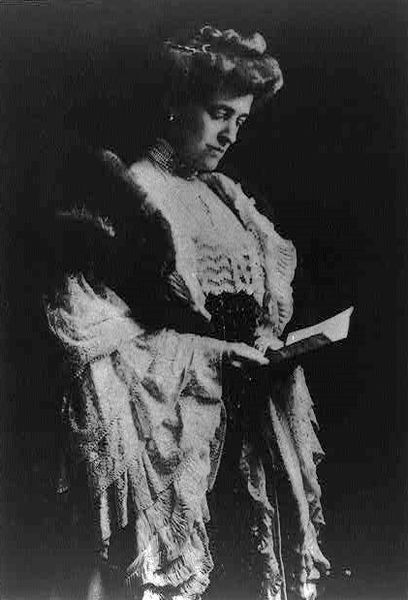
Wharton’s books capture this unique moment in American history, that period on the brink, when society was stuck in the past, but there was already an undercurrent of change driving people into more modern ways of thinking and being.
“In spite of illness, in spite even of the arch-enemy sorrow, one CAN remain alive long past the usual date of disintegration if one is unafraid of change, insatiable in intellectual curiosity, interested in big things, and happy in small ways.”
Edith Wharton quote from her memoir, A Backward Glance
Edith Wharton’s family inspired the expression, “keeping up with the Joneses”
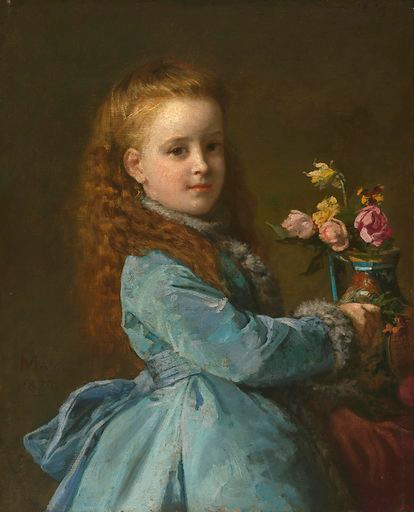
Let’s kick off this list of interesting facts about Edith Wharton with something from her childhood: Edith Wharton, born Edith Newbold Jones, came from the Joneses, yes, as in those Joneses, the ones with whom we are all trying to keep up. As in, Edith Wharton’s family was filthy, stinkin’ rich.
Edith Wharton was born in 1862 into a prominent family in New York City society. At the time she was born, American society was very much trying to imitate the social structure of Europe and, in particular, London. Edith Wharton’s family was wealthy and moved in the best circles. She grew up with every monetary privilege and was accustomed to luxury and frequent travel through Europe.
It’s impossible to list fun facts about Edith Wharton without bringing up, that Edith Wharton was not just familiar with, but raised in, the upper crust of American society because it is her insider’s understanding of this society that earned her great fame as a writer.
Even though Edith Wharton is known as a New York writer, she… hated New York
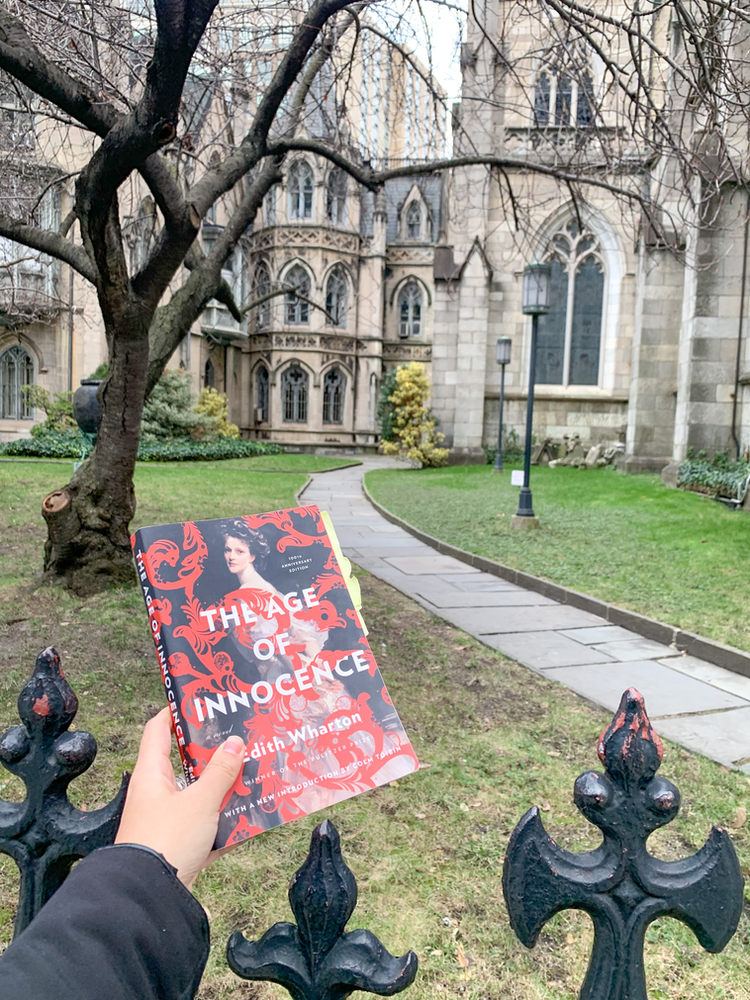
Okay, “hate” is too strong a word, but another interesting fact about Edith Wharton is that she thought New York was unforgivably ugly.
“One of the most depressing impressions of my childhood is my recollection of the intolerable ugliness of New York, of its untended streets and the narrow houses so lacking in external dignity, so crammed with smug and suffocating upholstery.”
Edith Wharton quote from A Backward Glance
Edith Wharton hated the uniformity of New York architecture. Having spent most of her early life traveling with her family throughout Europe, she preferred the more unique, ornate architecture of European cities, or the quiet beauty of the country where she and her husband built their home, the Mount.
The New York City of today would hardly be recognizable to Edith Wharton, but you can still see much of what makes Edith Wharton’s New York so iconic and memorable in literature. In this guest post, my literary friend Bethany takes us on a tour of Edith Wharton’s New York with modern sites from The Age of Innocence.
The Mount, Edith Wharton’s house, is haunted
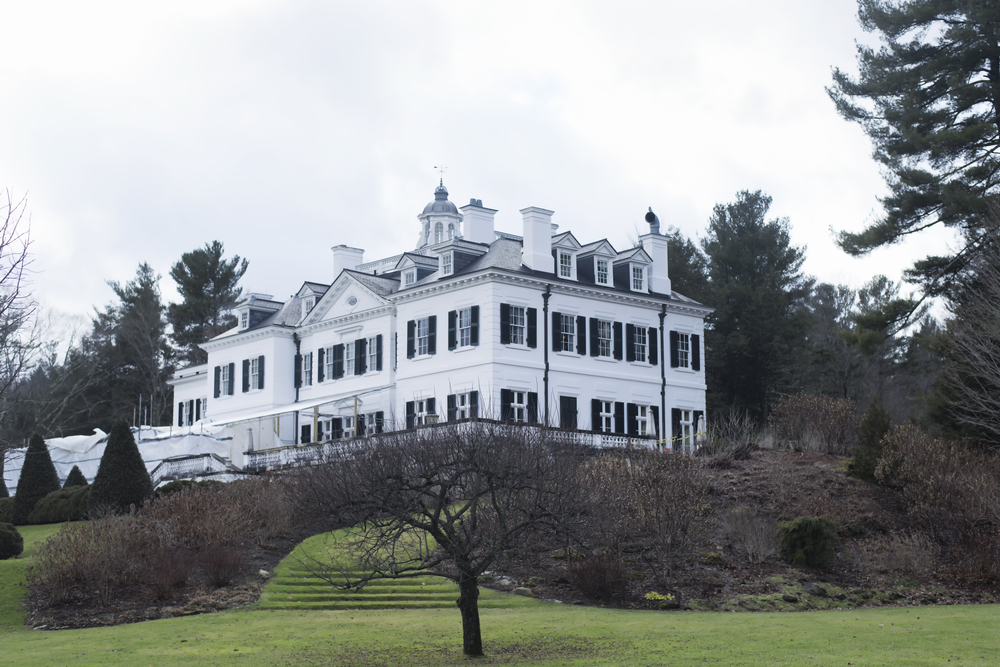
Although Edith Wharton is best known as a novelist, one of the great projects of her lifetime was overseeing the construction and decoration of her country home, The Mount.
“It was only at the Mount that I was really happy.”
She and her husband were forced to sell The Mount after only 10 years, after which Edith moved to France. In its many lifetimes, since the Whartons lived there, The Mount has functioned as a boarding school for girls as well as a home base for a theater troupe. Edith Wharton’s The Mount has since been converted into a museum and made to look as it did during Edith’s residence there.
But what a casual visitor to the Mount may not realize is that it is well-known as a haunted house. It was even featured in an episode of Ghost Hunters.
The ghost stories from the Mount are sometimes benign, such as people witnessing Edith sitting in her library reading (please bring me back as a reading ghost, oh forces of the universe!). Some ghost stories are more sinister and eerie… doors slammed, and the image of a ghastly woman peering in from the window.
If you’re interested in The Mount’s history of ghosts, you can take a ghost tour of Edith Wharton’s home. The tour guides are passionate ghost stories and paranormal explorers and have quite literally written books on the topic.
Edith Wharton wrote in nearly every genre, including architecture and interior design
Edith Wharton is best known for her New York novels, namely The Age of Innocence and The House of Mirth. As such, we tend to categorize her as a “society writer.” While that’s not exactly incorrect, the reality is that Edith Wharton wrote just about every kind of book imaginable. She was astonishingly prolific; she wrote more than 40 books in 40 years!
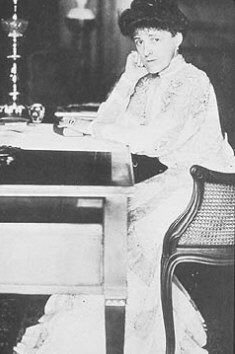
Here’s a sampling of Edith Wharton’s books from her lesser-known genres:
- Memoir (A Backward Glance)
- Interior design (The Decoration of Houses)
- Exterior/garden design (Italian Villas and their Gardens)
- Ghost stories (Tales of Men and Ghosts, Ghost Stories by Edith Wharton)
- Travel narratives (A Motor-Flight Through France)
- Instructional texts (The Writing of Fiction)
- Poetry (Artemis to Actaeon and Other Verse)
- War history (Fighting France, from Dunkerque to Belfort)
- Cultural Commentary (French Ways and Their Meaning)
Edith Wharton was the first woman to be awarded the Pulitzer Prize for fiction, but she wasn’t happy about it
How’s this for an interesting fact about Edith Wharton? In 1921, Edith Wharton was the first woman awarded the Pulitzer Prize for Fiction. She won for her most famous novel, The Age of Innocence, but she was not happy about receiving the award.
There was apparently quite a bit of behind-the-scenes drama and politics that went into the selection of Edith Wharton for the Pulitzer Prize. The jury actually selected a different book to win —Sinclair Lewis’s Main Street.
However, the Pulitzer Prize committee overturned the jury’s decision in favor of The Age of Innocence on, of all things, moral grounds. The Pulitzer Prize was meant to be awarded to “the American novel published during the year which shall best present the whole atmosphere of American life, and the highest standard of American manners and manhood.” The committee thought Main Street too offensive to win the award.
On receiving the Pulitzer Prize for The Age of Innocence, Edith Wharton wrote to the snubbed Lewis: “When I discovered that I was being rewarded —by one of our leading Universities —for uplifting American morals, I confess I did despair.” And when she learned that she had not been the jury’s choice, “disgust was added to despair.”
Edith Wharton received the French Legion of Honor
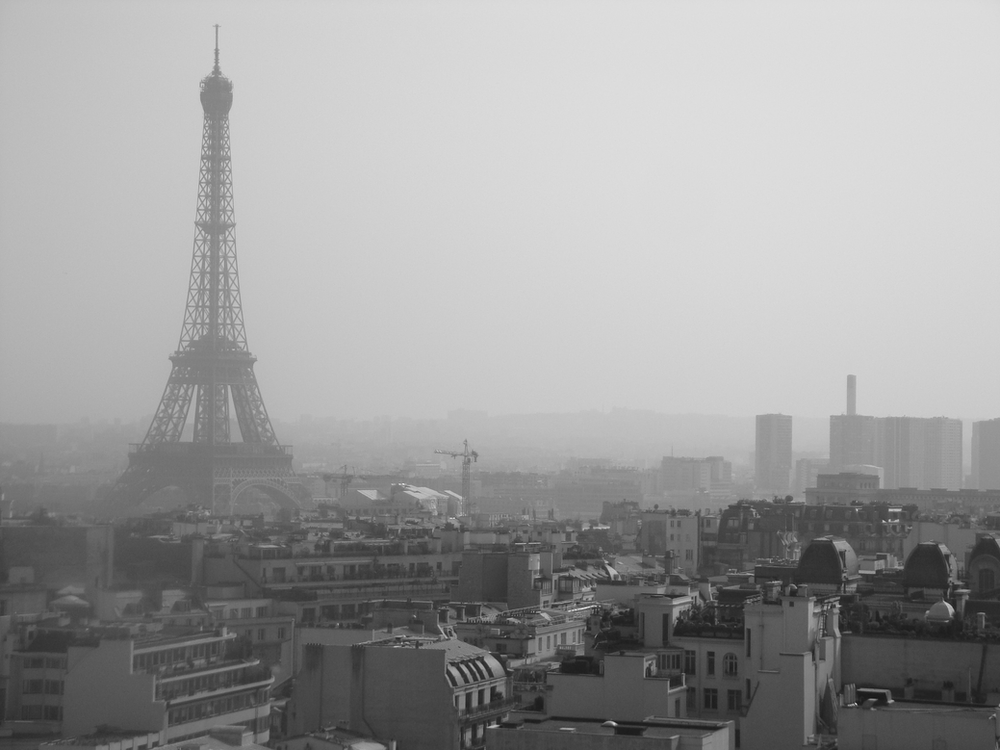
Edith Wharton is appropriately heralded as one of the greatest American novelists, but she lived a good portion of her life abroad. She spent a lot of time traveling Europe, but by the time she split from her husband, she moved abroad for good. For the last 30 years of Edith Wharton’s life, she lived in France.
During that time, World War I broke out in Europe. Edith Wharton used her money to build schools and homes for refugees in Belgium. She helped establish the Children of Flanders Relief Committee and the American Hostels for Refugees and raised money for the causes by compiling and editing The Book of the Homeless.
Another interesting fact about Edith Wharton during this period of her life is that she was one of the only journalists to visit the front lines of the war and to write about it.
In recognition of her contributions during the war, Edith Wharton was awarded the French Legion of Honor, the highest French decoration and one of the world’s most famous.
Edith Wharton was lifelong friends with Henry James
American novelists Henry James and Edith Wharton first became friends because of a letter, a letter that started a literary friendship that would be important and influential to both writers. After reading one of Wharton’s first published essays, Henry James wrote to her to encourage her writing.
“I applaud, I mean I value, I egg you on in, your study of the American life that surrounds you. Let yourself go in it & at it – it’s an untouched field, really”
From Henry James’s first letter to Edith Wharton, 1900
They developed a close friendship that they maintained for their lifetimes.
While Henry James and Edith Wharton’s friendship may be the most famous, Wharton knocked shoulders with more than one fellow literary great in her day. Among others, she was acquainted with Washington Irving since childhood and met Thomas Hardy several times (she observed in him an “unconquerable shyness” that made him “as remote and uncommunicative as our most unsocial American men of letters”).
Edith Wharton’s family and friends were embarrassed by her writing career
In her memoir, Edith Wharton candidly discusses the embarrassment of her friends and family towards her literary career.
“None of my relations ever spoke to me of my books, either to praise or blame — they simply ignored them; and among the immense tribe of my New York cousins… the subject was avoided as though it were a kind of family disgrace.”
Edith Wharton quote from A Backward Glance
When Edith Wharton began writing, a writing career was not an acceptable path for anyone in her social circle, let alone a woman. Add to this that many of Wharton’s novels featured critiques of the very society in which she and her friends were a part, and it’s perhaps not surprising that she alienated people during her career.
Still, it’s quite amusing to consider that one of the greatest American novelists was in a “we don’t talk about Bruno” type of situation with her family and friends.
If you haven’t yet read an Edith Wharton book, or if you’ve only been introduced to her most famous works, I hope this list of fascinating facts about Edith Wharton has convinced you to pick up another and do a deeper dive into the diverse works of this great American writer.
What classic author would you like to read about next?
Don’t forget to pin this post for later.